
Herbs for Women Navigating the Summer Heat

By mid-summer, most women I work with are describing some version of the same thing. Shorter fuse. Skin that flushes at the smallest provocation. Digestion that has gone loose and unpredictable. Waking at 2 a.m. throwing the covers off. Thirst that water alone does not seem to answer.
This is not a personal failing, and it is not random. In Ayurveda, late summer is Pitta season — the time of year governed by fire and water. Heat accumulates in the body the way it accumulates in a house: slowly, invisibly, and then all at once. Your body is not malfunctioning. It is signaling that the season has tipped your internal balance, and it would like some help coming back.
The good news is that Ayurveda is unusually specific here. Rather than one generic “summer supplement,” the tradition matches a plant to a signal. Below is that map.
Hot and flushed — Amalaki
Amalaki (Indian gooseberry) is the great Pitta pacifier. It is cooling without being depleting, and it is one of the richest whole food sources of vitamin C in the botanical world. Traditionally it is used when heat has risen into the skin and the head: flushing, reactive complexion, a sense of being lit from the inside.
It is also one of the three fruits in Triphala, which is why women who take Triphala for digestion often notice their skin settles too.
Dehydrated — cucumber cilantro water with salt
Plain water passes through. What rehydrates you is water your body can actually hold — which requires minerals. Slice cucumber into room-temperature water, add a few sprigs of cilantro and a pinch of good mineral salt, and let it sit an hour.
Skip the ice. Ice constricts the digestive fire at exactly the moment you need it working, which is why iced drinks in summer often leave you bloated and still thirsty.
Sluggish — Guduchi
Guduchi (Tinospora cordifolia) is the herb for the heavy, foggy, low-grade-unwell feeling that follows a stretch of heat and poor sleep. Classically it is described as a rejuvenative that clears ama — the residue of incomplete digestion — while supporting immune resilience. It is cooling without being harsh.
Bloated — Triphala
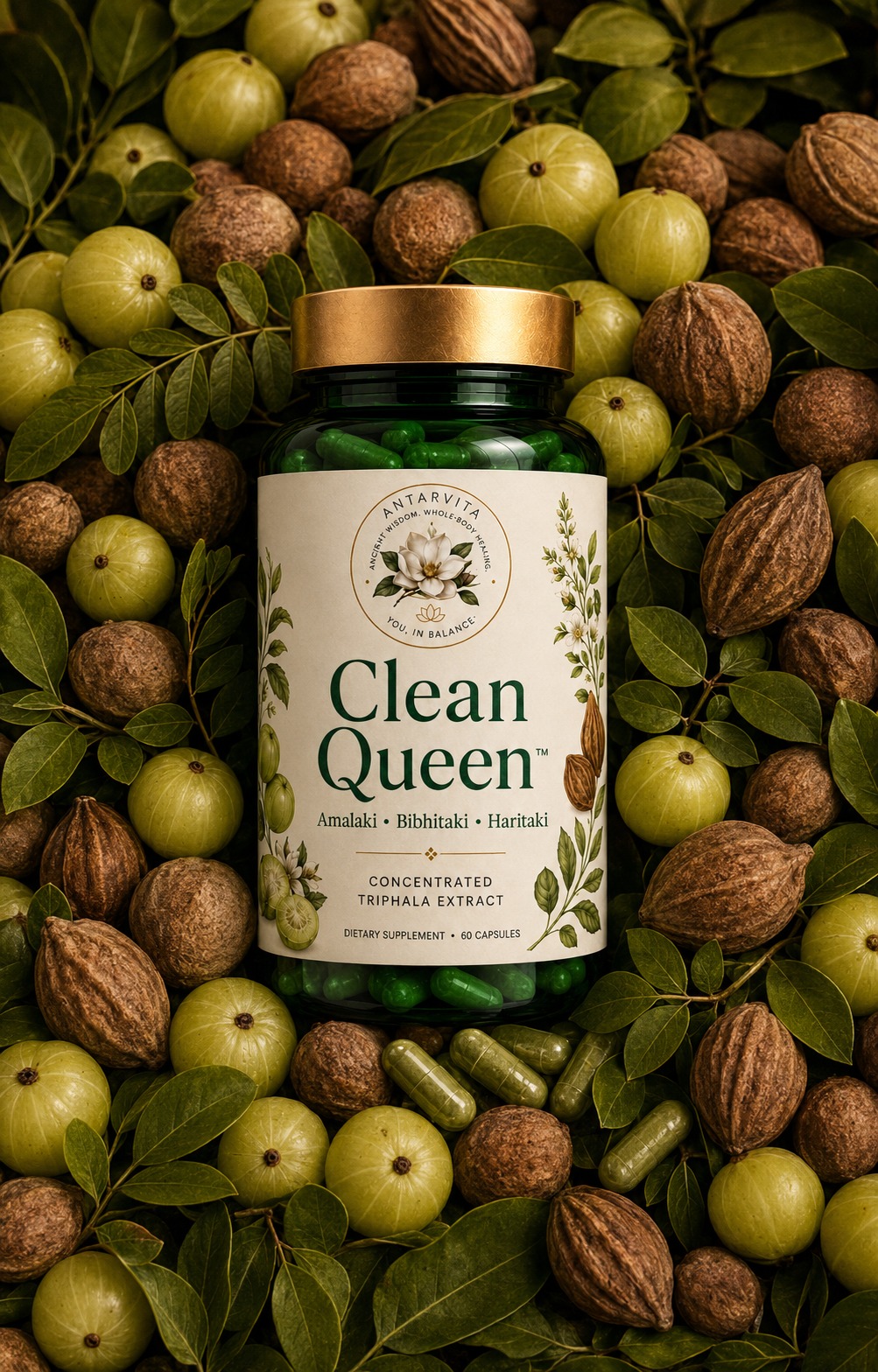
Triphala is the most-used formula in Ayurveda for a reason. Three fruits — Amalaki, Bibhitaki, Haritaki — that together tone the digestive tract rather than forcing it. It is the elimination support women reach for when summer has left them puffy, backed up, and heavy in the lower belly.
This is exactly the role Clean Queen™ plays in the Antarvita system: clear the terrain first, so everything you take afterward actually lands.
Headache — fresh ginger
Counterintuitive, because ginger is warming. But most summer headaches are not heat headaches — they are congestion and sluggish circulation headaches, often paired with a heavy meal eaten in the heat. A thin slice of fresh (not dried) ginger in warm water moves things along without stoking Pitta the way dried ginger would.
Irritable — Holy Basil
Tulsi, or Holy Basil, is the plant for the woman whose patience evaporated somewhere in July. It is an adaptogen with a long traditional use for mental clarity and emotional evenness — a softening of the edges rather than a sedation.
Restless sleep — licorice tea
Licorice root is sweet, moistening, and traditionally used to support adrenal reserve and soothe an over-revved system. A warm cup in the evening tells the nervous system the day is closed. (Note: licorice can raise blood pressure with sustained use — if you manage hypertension, ask your practitioner first.)
Overheating at night — Shatavari
Shatavari is the queen of women’s herbs, and it is the answer when heat and dryness arrive together: night sweats, dry skin, vaginal dryness, a body that feels parched from the inside. Unlike most cooling herbs, Shatavari is moistening — it does not just lower the temperature, it restores what the heat took.
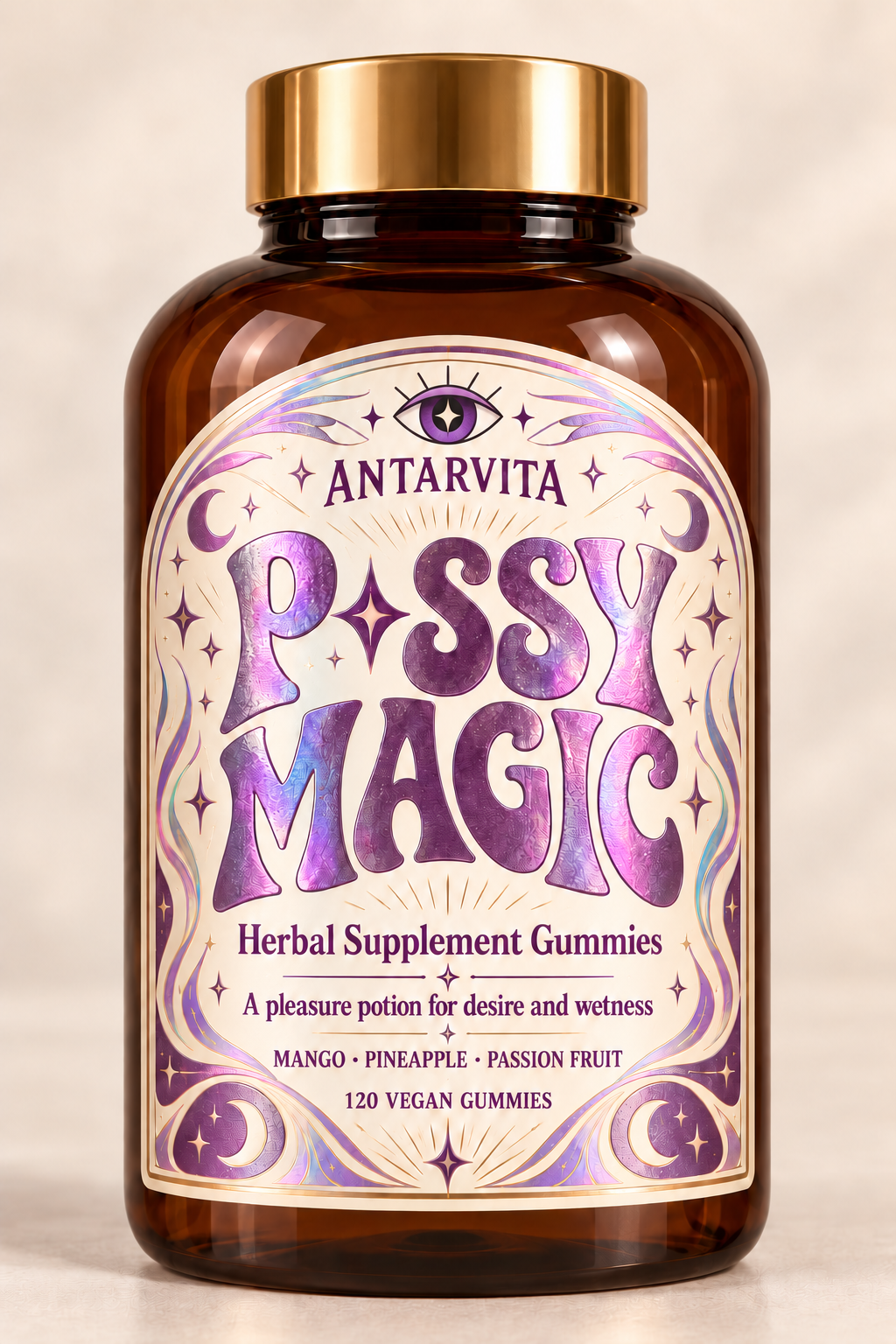
It is a cornerstone herb in women's herbal formulas for exactly this reason.
Hormonal hot and cold — Arjuna
Arjuna is traditionally the heart herb — used where circulation, emotional weight, and temperature regulation intersect. For women in perimenopause riding the swing between hot and chilled, it is a steadying plant.
Digestion support — CCF tea
Cumin, coriander, fennel. Equal parts, a teaspoon of the blend steeped in hot water. It is the daily maintenance tea of Ayurveda: gentle enough for every constitution, effective enough that most women notice less bloating within a week of drinking it after meals.
How to actually use this
Do not take all of them. Pick the one or two signals that are loudest right now, work with those plants for three to four weeks, and pay attention. Herbs are conversational, not corrective — they work best when matched to the constitution you were born with rather than dropped in generically.
If you do not know which pattern is yours, that is the place to start. The 2-minute Libido Body Type Quiz will tell you whether you are running hot, dry, or heavy — and which of these herbs your body is actually asking for.
— Katy
Katy Kennedy, MS · Founder, Antarvita
Frequently asked questions
What are the best cooling herbs for women in summer?
Amalaki for flushing and heat in the skin, Shatavari for night sweats and dryness, Guduchi for sluggishness, Triphala for bloating, Holy Basil for irritability, and CCF tea (cumin, coriander, fennel) for everyday digestion support.
How do I cool my body down naturally?
Hydrate with room-temperature cucumber cilantro water with a pinch of mineral salt rather than iced drinks, eat sweet and bitter foods, avoid midday sun and intense heat-building exercise, and use cooling herbs such as Amalaki or Shatavari.
Is Shatavari good for hot flashes and night sweats?
Shatavari is traditionally used for women who overheat at night and feel dry. It is both cooling and moistening, which is why it is favored over purely cooling herbs when heat and dryness occur together.
Why does Ayurveda say to avoid ice in summer?
Ice weakens agni, the digestive fire. Cold drinks slow digestion at the exact moment the body needs it working, which commonly leaves women bloated and still thirsty despite drinking plenty of water.
The herbs behind this article
Begin to understand your body through an Ayurvedic lens
If you want to understand your body through a personalized Ayurvedic lens, begin with the Libido Body Type Quiz or explore a private Antarvita consultation.
References
- Gopumadhavan, S., et al. Amla (Emblica officinalis): A review of its phytochemistry, ethnomedicinal uses and medicinal potentialities. National Library of Medicine. https://pmc.ncbi.nlm.nih.gov/articles/PMC7522354/
- Alok, S., et al. Plant profile, phytochemistry and pharmacology of Asparagus racemosus (Shatavari): A review. Asian Pacific Journal of Tropical Disease. https://pmc.ncbi.nlm.nih.gov/articles/PMC4027290/
- Cohen, M. M. (2014). Tulsi — Ocimum sanctum: A herb for all reasons. Journal of Ayurveda and Integrative Medicine, 5(4), 251–259. https://pmc.ncbi.nlm.nih.gov/articles/PMC4296439/
- Peterson, C. T., et al. (2017). Therapeutic uses of Triphala in Ayurvedic medicine. Journal of Alternative and Complementary Medicine, 23(8), 607–614. https://pmc.ncbi.nlm.nih.gov/articles/PMC5567597/
- Sharma, P., et al. (2012). Tinospora cordifolia (Guduchi): Validation of the Ayurvedic pharmacology through experimental and clinical studies. International Journal of Ayurveda Research. https://pmc.ncbi.nlm.nih.gov/articles/PMC3151395/