
Triphala: The Complete Guide to What the Three-Fruit Formula Actually Does
Short Answer
Triphala — Sanskrit for three fruits — is a blend of Amalaki (Emblica officinalis), Bibhitaki (Terminalia bellirica) and Haritaki (Terminalia chebula). Ayurveda has used it for roughly two thousand years as a gentle daily rasayana for the gut. Human research supports its role in digestive regularity and bowel function; laboratory work shows antioxidant, anti-inflammatory and prebiotic activity (Peterson et al., 2017; Tarasiuk et al., 2018; Sharma et al., 2020). It is not a stimulant laxative and is traditionally taken nightly.
If there is one formula that has survived every trend in wellness — every juice cleanse, every detox tea, every fifteen-day reset — it is Triphala. It shows up in the oldest Ayurvedic texts, it is still prescribed daily by practitioners in India, and it is now quietly appearing in peer-reviewed journals. That kind of longevity is worth paying attention to. It usually means something actually works.
This piece is the complete version. What Triphala is made of, what Ayurveda says it does and why, what the research supports, where the evidence genuinely runs out, and how to take it in a way you will actually keep doing.
What Triphala Is — Three Fruits, One Formula
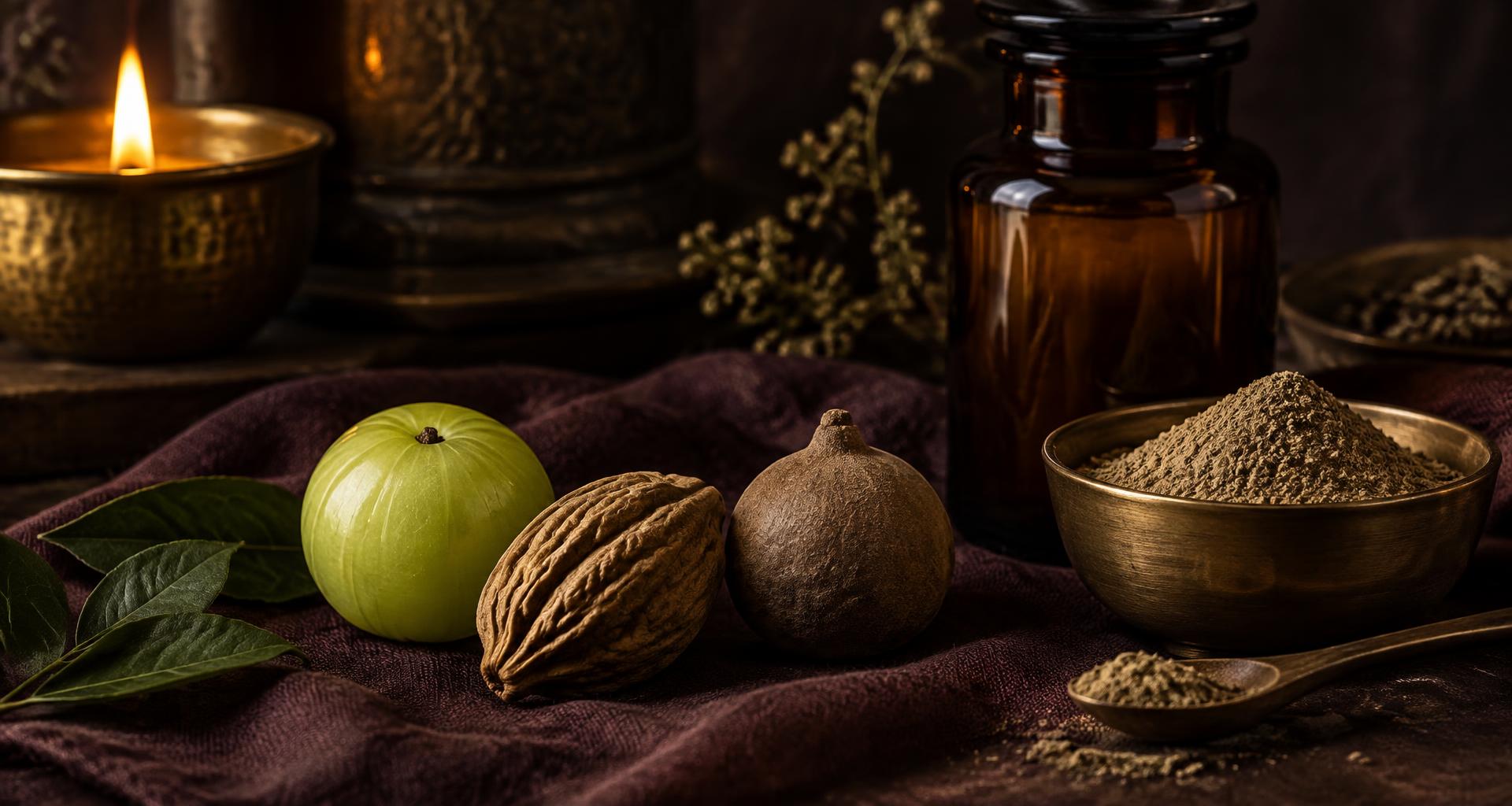
Triphala combines the dried fruits of three trees in equal parts, and each brings a distinct personality to the blend.
Amalaki (amla, or Indian gooseberry) is one of the richest natural sources of vitamin C and a deep reservoir of polyphenols. Classical Ayurveda considers it the premier rasayana — a rejuvenative — cooling, sour, and especially suited to Pitta patterns (Tarasiuk et al., 2018).
Bibhitaki is the astringent one. Traditionally it is used to clear excess mucus and Kapha-type heaviness from the digestive and respiratory tracts, and it contributes tannins and lignans to the formula (Peterson et al., 2017).
Haritaki is called the "king of medicines" in Tibetan tradition and is the gentle bowel-mover of the three — not a stimulant laxative, but a fruit that Ayurveda describes as restoring the natural downward rhythm of the colon (apana vayu). It is also the most antioxidant-dense of the three in laboratory assays (Tarasiuk et al., 2018).
Together they cover all six tastes recognized in Ayurveda except salty — which, in the classical view, is part of why the formula can be taken daily by almost every constitution rather than matching one dosha only.
Digestive Regularity: The Best-Documented Benefit
This is where the human evidence lives. A randomized, double-blind, placebo-controlled trial found that Triphala improved measures of bowel function and digestive comfort compared with placebo, with a favourable safety profile (Peterson et al., 2017). A later clinical study similarly reported improvements in stool frequency and consistency among adults with functional constipation (Sharma et al., 2020).
The important distinction: Triphala is not senna. It does not force the bowel into action, which is why it can be taken nightly for years without the dependency pattern stimulant laxatives create. In Ayurvedic terms, it is a anulomana — it restores the natural downward movement rather than overriding it.
The Gut Microbiome Connection
The newer research is about what Triphala does to the terrain, not just the transit. Its polyphenols act as prebiotic substrates — gut bacteria metabolize them into compounds associated with reduced inflammation and a healthier intestinal lining (Peterson et al., 2017). In plain language: Triphala appears to feed the microbes you want more of, and the microbes, in return, make its active compounds more available to your body.
Ayurveda predicted this dynamic long before the word microbiome existed. The classical framing is that healthy agni — digestive fire — plus clear channels is the foundation every other tissue is built on. The gut first. Everything else downstream.
Antioxidant and Anti-Inflammatory Activity
Laboratory research on Triphala's constituents is extensive. The formula is dense in vitamin C, gallic acid, ellagic acid, chebulinic acid and a broad family of tannins and flavonoids, and it demonstrates strong free-radical-scavenging and anti-inflammatory activity in cell and animal models (Tarasiuk et al., 2018). This is the chemistry behind its rasayana reputation — the classical claim that long-term use protects tissue rather than just clearing it.
A note of honesty here: most of this antioxidant data is preclinical. It tells us the compounds are potent; it does not yet prove the magnitude of effect in humans. What it does is give biological plausibility to what two thousand years of daily use already suggested.
Metabolism, Weight, and Hormonal Rhythm
You will see Triphala marketed for weight loss. The honest reading: a few human studies report modest improvements in weight and metabolic markers alongside dietary change (Peterson et al., 2017), but no one should take Triphala expecting it to do the work of food and sleep.
The more interesting conversation for women is hormonal. Ayurveda does not treat hormonal balance as a hormone problem first — it treats it as a digestion-and-elimination problem. Estrogen, for example, is cleared through the gut, and sluggish elimination means it gets reabsorbed instead of excreted. When practitioners say Triphala "balances hormones," this is usually the mechanism they mean: not that the fruits act on the ovaries, but that regular, complete elimination keeps hormonal byproducts moving out. It is upstream medicine.
Who It Suits, Who Should Pause
Triphala suits most adults as a nightly digestive companion, especially anyone whose body runs dry, sluggish or irregular. Pause and speak with a practitioner if you are pregnant, breastfeeding, managing a serious digestive condition, or taking prescription medication — its polyphenols can interact with drug metabolism (Peterson et al., 2017). Loose stool at first usually just means the dose was high; reduce it.
How to Actually Take It (Without Choking Down Powder)
The traditional method is a teaspoon of powder steeped in warm water at night, ideally an hour or two after dinner. It is also, frankly, bitter — the kind of bitter that makes a nightly ritual collapse by week two. Capsules solve the taste but most of us forget them by Thursday.
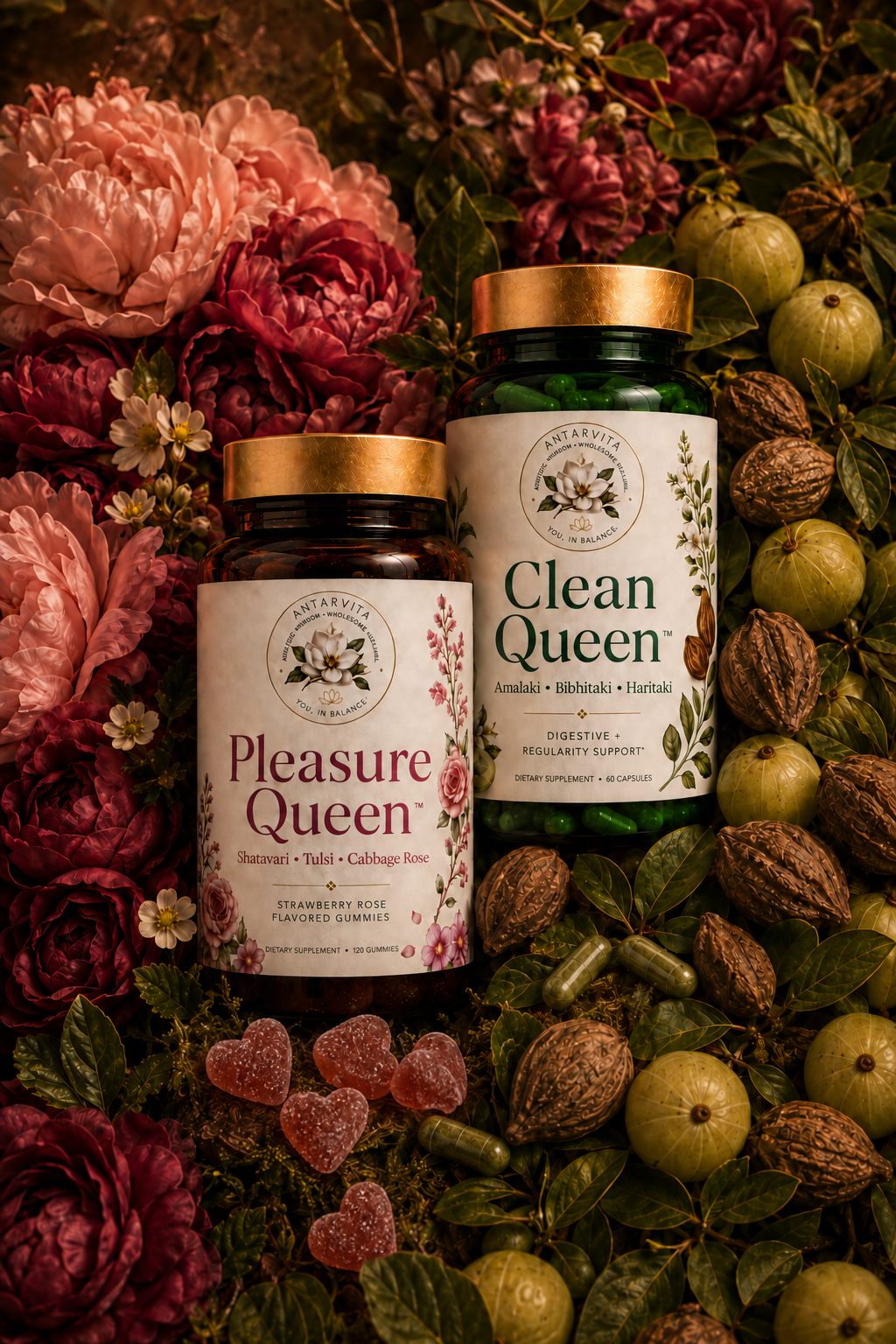
That is exactly the problem I built Clean Queen™ to solve: organic Triphala folded into a soft, lightly sweet gummy you take with your evening routine — no capsules, no powder, no glass of bitter water sitting on the counter judging you. It is phase one of the Spark Ritual Starter Kit for the classical reason: clear the channels first, then nourish. The gut before the glow.
The Bottom Line
Triphala is not a cleanse, not a laxative, and not a trend. It is a slow, intelligent formula that keeps the body's most fundamental rhythm — digest, transform, eliminate — honest. Take it nightly, give it weeks, and let the downstream benefits arrive in their own time.
— Katy
Katy Kennedy, MS · Founder, Antarvita
Frequently asked questions
Is Triphala a laxative?
No. It is a gentle bowel-tonic (anulomana) that supports the colon's natural rhythm rather than forcing it, which is why it can be taken nightly long-term without dependency.
When should I take Triphala?
At night, an hour or two after dinner. That timing lets it work with the body's overnight repair and elimination cycle, which is how Ayurveda has prescribed it for centuries.
How long does Triphala take to work?
Digestive regularity often shifts within the first one to two weeks. The deeper rasayana effects — energy, skin, downstream balance — are judged over a month or more of consistent nightly use.
Who should not take Triphala?
Anyone pregnant or breastfeeding, or on prescription medication, should check with a practitioner first, since its polyphenols can interact with how some drugs are metabolized.
The herbs behind this article

Begin to understand your body through an Ayurvedic lens
If you want to understand your body through a personalized Ayurvedic lens, begin with the Libido Body Type Quiz or explore a private Antarvita consultation.
References
- Peterson, C. T., Denniston, K., & Chopra, D. (2017). Therapeutic uses of Triphala in Ayurvedic medicine. Journal of Alternative and Complementary Medicine, 23(8), 607–614. https://pubmed.ncbi.nlm.nih.gov/28696777/
- Tarasiuk, A., Mosińska, P., & Fichna, J. (2018). Triphala: Current applications and new perspectives on the treatment of functional gastrointestinal disorders. Chinese Medicine, 13, 39. https://pmc.ncbi.nlm.nih.gov/articles/PMC6130678/
- Sharma, A., Bhagat, S., & Kaur, S. (2020). Evaluation of the efficacy and safety of Triphala in patients with functional constipation. Journal of Ayurveda and Integrative Medicine, 11(4), 439–444. https://www.sciencedirect.com/science/article/pii/S0975947620301147