Over-the-Counter Options for Vaginal Dryness: What to Consider

Choosing an over-the-counter product for vaginal dryness starts with understanding whether you need ongoing moisture, lubrication during intimacy, or an evaluation of persistent symptoms. This guide compares product categories, ingredients, and practical considerations.
There is no single best over-the-counter solution for vaginal dryness. The right choice is the one that fits your need, your skin and your situation. We have not lab-tested or ranked individual brands; the criteria below are how to judge any product yourself.
The main over-the-counter categories
Vaginal moisturizers
Used on a regular schedule — often every two to three days — regardless of sexual activity. They are designed to help vaginal tissue hold water and feel more comfortable day to day. Many are non-hormonal gels or inserts; some contain hyaluronic acid.
Lubricants
Used in the moment to reduce friction during touch, sex or toy use. Water-based lubricants rinse easily and work with condoms and most toys. Silicone-based lubricants last longer and are condom-compatible but can degrade silicone toys. Oil-based options, including coconut oil, can weaken latex condoms.
Vulvar balms and oils
For external skin comfort on the vulva. They are not designed for internal use unless the label says so.
Oral supplements
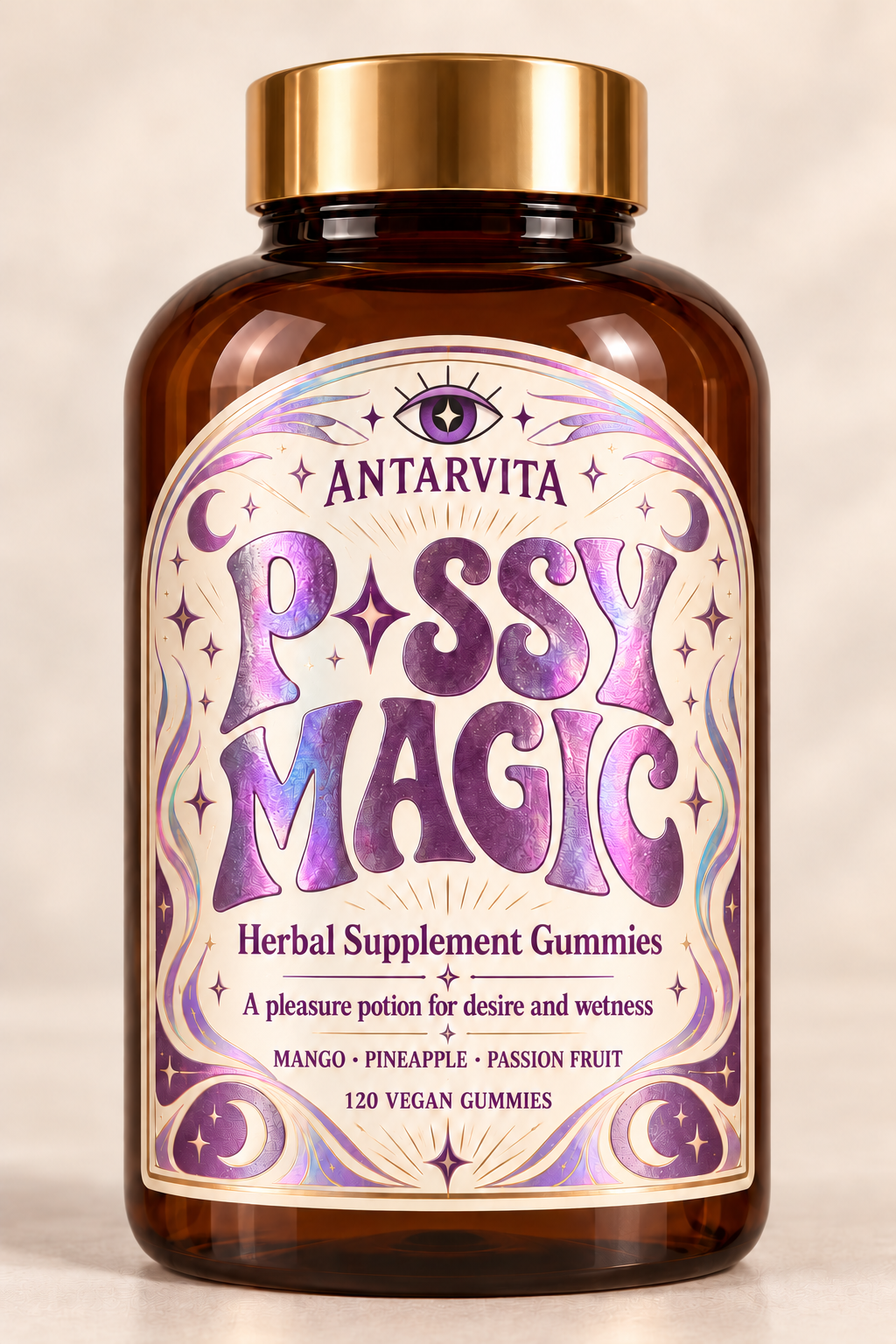
Herbal supplements such as P✨SSY MAGIC gummies are taken by mouth as part of a daily routine. They are not a lubricant or a vaginal moisturizer, they do not act in the moment, and dietary supplements are not approved to treat vaginal dryness. If you are curious about the herb behind ours, read Shatavari research for women.
Supplements and vitamins for vaginal dryness: what does the evidence show?
Oral supplements and vitamins are not interchangeable with products applied to vaginal tissue. There is no established best vitamin or oral botanical formula for vaginal moisture. Small studies of individual ingredients, different doses or vaginal preparations cannot establish that an oral supplement treats dryness—or that our gummies do.
| Option | Evidence and purpose | What to check |
|---|---|---|
| Vaginal moisturizer | A non-hormonal topical option for regular, ongoing comfort. | Vaginal-use labeling, ingredients, directions and irritation. |
| Lubricant | Reduces friction during intimacy; does not restore hormone levels. | Condom and toy compatibility; avoid irritating additives. |
| Oral vitamins, including D or E | Not established as routine treatment for vaginal dryness. Research on vaginal vitamin preparations does not prove effects from swallowing a vitamin. | Ask whether supplementation is appropriate; avoid high doses or inserting oral capsules vaginally. |
| Oral soy/isoflavone supplements | Some menopause research exists, but findings vary by outcome and preparation; this does not establish reliable vaginal-moisture benefits. | Discuss hormone-sensitive conditions and interactions. Long-term extract safety is uncertain. |
| Oral Ayurvedic botanicals | Traditional women's wellness use is separate from clinical evidence. No proven dryness-treatment effect or onset is established for P✨SSY MAGIC. | Full ingredients, medicine interactions, pregnancy and breastfeeding guidance. |
Correcting a diagnosed nutritional need is a separate decision from treating vaginal dryness. “Natural” does not guarantee safety. Ask your clinician or pharmacist about medicines, hormone-sensitive conditions and supplement risks; do not replace prescribed care with an unverified oral or homemade vaginal preparation.
The NCCIH evidence summary describes the limitations of complementary menopause research. The NAMS GSM position statement discusses evidence-supported comfort and prescription options. Neither establishes a botanical gummy as a proven vaginal-dryness treatment.
How to choose: practical criteria
- Intended use. Ongoing comfort points to a moisturizer; comfort during intimacy points to a lubricant. Many women use both.
- Potential irritants. Fragrance, flavors, warming or tingling agents, and some preservatives are common triggers for sensitive tissue.
- Osmolality and pH. The World Health Organization has published guidance noting that very high-osmolality lubricants may irritate vaginal tissue; some brands list these values.
- Condom and toy compatibility. Check the label before relying on condoms.
- Pregnancy or trying to conceive. Some lubricants are not sperm-friendly; look for products labeled fertility-friendly if conception matters.
- Hormone-free versus hormonal. Over-the-counter moisturizers and lubricants are generally non-hormonal. Low-dose vaginal estrogen is a prescription option to discuss with a clinician.
How to choose the right vaginal moisturizer online
When choosing a vaginal moisturizer online, check its intended use, ingredients, directions, and seller information. A vaginal moisturizer serves a different purpose from a lubricant, vulvar balm, or oral supplement.
- Confirm the label says it is intended for internal vaginal use.
- Read the full ingredient list, not only the front of the package.
- Look for clear directions on how often to apply.
- Buy from the manufacturer or an authorized retailer, check expiration dates, and be wary of listings with no company contact information.
- Patch-test cautiously and stop if burning, itching or swelling occurs.
When to see a clinician
Over-the-counter products are for comfort. See a healthcare provider if dryness persists despite them, if sex is painful, or if you notice bleeding, unusual discharge, odor, sores or recurrent infections. Vaginal discomfort has many causes beyond dryness. Under 40? Read about vaginal dryness in your 20s and 30s. For daily habits and Ayurvedic approaches, see natural remedies for vaginal dryness.
— Katy
Katy Kennedy, MS · Founder, Antarvita
Frequently asked questions
What vitamins or supplements help vaginal dryness?
No oral vitamin or botanical formula is established as the best routine treatment for vaginal dryness. Evidence depends on the specific formulation, dose, route and outcome. Vaginal preparations and oral supplements are not interchangeable; ask a clinician about risks and persistent symptoms.
What is the difference between a vaginal moisturizer and a lubricant?
A moisturizer is used on a regular schedule for ongoing comfort; a lubricant is used during intimacy to reduce friction.
Are over-the-counter vaginal moisturizers hormone-free?
Most over-the-counter moisturizers and lubricants are non-hormonal. Check the label, and ask a clinician about prescription options if symptoms persist.
Is an oral herbal supplement the same as a vaginal moisturizer?
No. Oral supplements are taken by mouth and are not lubricants or moisturizers, and dietary supplements are not approved to treat vaginal dryness.
The herbs behind this article
Begin to understand your body through an Ayurvedic lens
If you want to understand your body through a personalized Ayurvedic lens, begin with the Libido Body Type Quiz or explore a private Antarvita consultation.
References
- NCCIH. Menopausal symptoms and complementary health approaches: evidence summary. https://www.nccih.nih.gov/health/providers/digest/menopausal-symptoms-and-complementary-health-approaches-science
- NAMS. The 2020 genitourinary syndrome of menopause position statement. https://doi.org/10.1097/GME.0000000000001609
- Mayo Clinic. Vaginal atrophy (genitourinary syndrome of menopause): Diagnosis and treatment. https://www.mayoclinic.org/diseases-conditions/vaginal-atrophy/diagnosis-treatment/drc-20352294
- World Health Organization. Use and procurement of additional lubricants for male and female condoms: WHO/UNFPA/FHI360 advisory note (2012). https://www.who.int/publications/i/item/WHO-RHR-12.33
- American College of Obstetricians and Gynecologists. The Menopause Years (FAQ). https://www.acog.org/womens-health/faqs/the-menopause-years