Vaginal Dryness Natural Remedies: What Ayurveda Says (And What Actually Helps)
Short Answer
In Ayurveda, vaginal dryness is almost always a Vata pattern — the body running dry, fast, and depleted. Natural remedies that actually help are the ones that add moisture and slow the nervous system down: warming oils applied externally (sesame, coconut, ghee), moistening foods (ghee, soaked dates, stewed fruit, coconut water), and rebuilding herbs like Shatavari. Estrogen changes, stress and over-caffeination all amplify the pattern; hydration alone rarely fixes it.
Vaginal dryness is one of those symptoms women are trained to whisper about — or apologize for — but it shows up at every age, not just in menopause. If you've been quietly Googling vaginal dryness natural remedies at 11pm, you are in very good company, and the answer is more layered than the supplement aisle suggests.
Ayurveda has a specific way of reading this symptom. It doesn't call it dryness — it calls it a Vata imbalance. Vata is the dosha of air and space: movement, quickness, cold, and dryness. When Vata is elevated (from stress, over-work, under-eating, too much travel, too much caffeine, not enough sleep), the whole body starts to run drier. Skin gets thinner. Digestion goes irregular. Sleep gets lighter. And yes — mucous membranes, including vaginal tissue, lose their supple, lubricated quality.
"Vaginal dryness isn't a hydration problem. It's a signal that the entire body has been running dry — and the tissues that need moisture most were the first to feel it."
Why Vaginal Dryness Happens (Even If You're Not in Menopause)
Estrogen is the most-blamed culprit — and it's real. Estrogen keeps the vaginal wall plump, elastic, and well-lubricated, and when estrogen dips (perimenopause, menopause, postpartum, breastfeeding, low-dose hormonal birth control, over-exercise, chronic stress) the tissue thins. But Ayurveda would zoom out further. Vaginal dryness rarely shows up alone. It usually arrives with a specific cluster:
- ◇Dry, flaky, or thinning skin
- ◇Constipation or hard, dry stools
- ◇Light, broken, or anxious sleep
- ◇A racing mind, especially at night
- ◇Low libido and a feeling of being "not quite in your body"
If a handful of those sound familiar, you're not looking at a local tissue problem. You're looking at a whole-body Vata pattern, and the vagina is simply the most honest mirror of it.
Vaginal Dryness Natural Remedies That Actually Help
The point of an Ayurvedic approach isn't to slather on more product — it's to give the body back what it's been running short on: oil, warmth, slowness, and food that actually nourishes tissue. These are the natural remedies I return to over and over with clients.
1. External oleation (the most under-used remedy)
Warm, organic sesame oil or coconut oil — gently applied externally to the vulva and perineum before bed — is one of the oldest Ayurvedic supports for dryness. Sesame is warming and deeply nourishing; coconut is cooling and soothing (better if there's any heat, burning, or irritation). This isn't a lubricant substitute for sex. It's a daily quiet ritual of returning oil to the tissue.
Note: oil-based applications can degrade latex condoms. Use them for tissue nourishment, not as intercourse lubricant if barrier method matters.
2. Rebuild with Shatavari
Shatavari (Asparagus racemosus) is Ayurveda's premier herb for the female reproductive system — it's traditionally used for vitality and hormonal support, and modern research documents its role in menopausal symptoms and reproductive tissue health. It works slowly. Give it eight to twelve weeks of daily use before deciding whether it helped.
3. Eat moisture back into your body
Dryness is a food story too. Vata-pacifying foods add oil, warmth, and grounding weight: cooked breakfasts (not smoothies on ice), a spoonful of ghee, soaked dates, stewed apples with cardamom, warm milk with a pinch of nutmeg, coconut water, avocado, soaked almonds, oatmeal cooked in almond milk. Raw salads, iced coffee, and calorie-deficit crash diets all move the body in the opposite direction.
4. Slow the nervous system down
The vagina is nervous-system tissue. Chronic sympathetic activation (the "always-on" state) reduces pelvic blood flow and lubrication in real time. Consistent sleep, warm baths, unhurried mornings, and any nervous-system practice you'll actually do (yoga nidra, slow walks, pelvic-floor breathing) matters more than any single herb.
A simple practice
Nightly Oil Ritual — 4 minutes
- Warm a tablespoon of organic sesame or coconut oil between your palms.
- After your shower or bath, apply externally to the vulva, inner thighs, and lower belly with slow, unhurried hands.
- Take three long breaths into the pelvis before you dress or get into bed.
- Repeat nightly. Give the tissue two to three weeks before you evaluate.
This is not medical treatment. It's a way of telling the body: this part of me is allowed to be cared for.
What to Cut Back On
Natural remedies work faster when the drying inputs come down. In practice this usually means: less caffeine (three-plus cups is Vata-aggravating for most women), less alcohol (drying and dehydrating), fewer raw and iced foods when you already feel cold or brittle, and — for a season — less high-intensity exercise if it's leaving you wired and depleted rather than energized.
When to See Someone
Persistent burning, itching, unusual discharge, bleeding, or pain with intercourse are not "just dryness" and deserve a proper pelvic exam. Ayurveda is a complement to good medical care, not a substitute for it. If dryness is severe or new, see a qualified practitioner first, then layer these rituals in.
Where to Start This Week
Choose one — not all. Consistency wins over intensity:
- ◇The nightly oil ritual, seven nights in a row.
- ◇Add a spoon of ghee and a handful of soaked almonds to breakfast.
- ◇Start Shatavari daily and give it 8–12 weeks.
Frequently Asked Questions
What's the best natural remedy for vaginal dryness?
There isn't a single one. The most reliable Ayurvedic combination is external oleation with warm sesame or coconut oil, daily Shatavari, and Vata-pacifying foods (ghee, soaked dates, warm cooked breakfasts). Give it four to eight weeks.
Can vaginal dryness happen without menopause?
Yes. Stress, over-exercise, breastfeeding, hormonal birth control, low body fat, chronic under-eating, and a Vata-heavy lifestyle can all cause dryness at any age.
Does Shatavari really help vaginal dryness?
Traditionally yes, and modern research supports its role in supporting reproductive tissue and menopausal symptoms. It works slowly — think tonic, not painkiller.
Is coconut oil safe to apply vaginally?
Applied externally to the vulva, most women tolerate coconut oil well. Do a small patch test first, use organic and virgin, and avoid it with latex condoms.
Educational content only. This article is not medical advice, diagnosis, or treatment. Please consult a qualified healthcare practitioner before beginning any herbal, dietary, or wellness protocol, especially if pregnant, breastfeeding, taking medication, or experiencing persistent vaginal symptoms.
— Katy
Katy Kennedy, MS · Founder, Antarvita
Frequently asked questions
What is the best natural remedy for vaginal dryness?
The most reliable Ayurvedic combination is external oleation with warm sesame or coconut oil, daily shatavari, and Vata-calming foods like ghee, soaked dates and warm cooked breakfasts. Give it four to eight weeks of consistent daily use.
Can vaginal dryness happen without menopause?
Yes. Stress, over-exercise, breastfeeding, hormonal birth control, low body fat, chronic under-eating and a Vata-heavy lifestyle can all cause vaginal dryness at any age.
Does shatavari really help vaginal dryness?
Traditionally yes, and modern research supports shatavari's role in supporting reproductive tissue and menopausal symptoms. It works slowly — most women feel a shift in eight to twelve weeks of daily use.
Is coconut oil safe to apply vaginally?
Applied externally to the vulva, most women tolerate coconut oil well. Do a small patch test first, use organic and virgin, and avoid it with latex condoms as oils degrade latex.
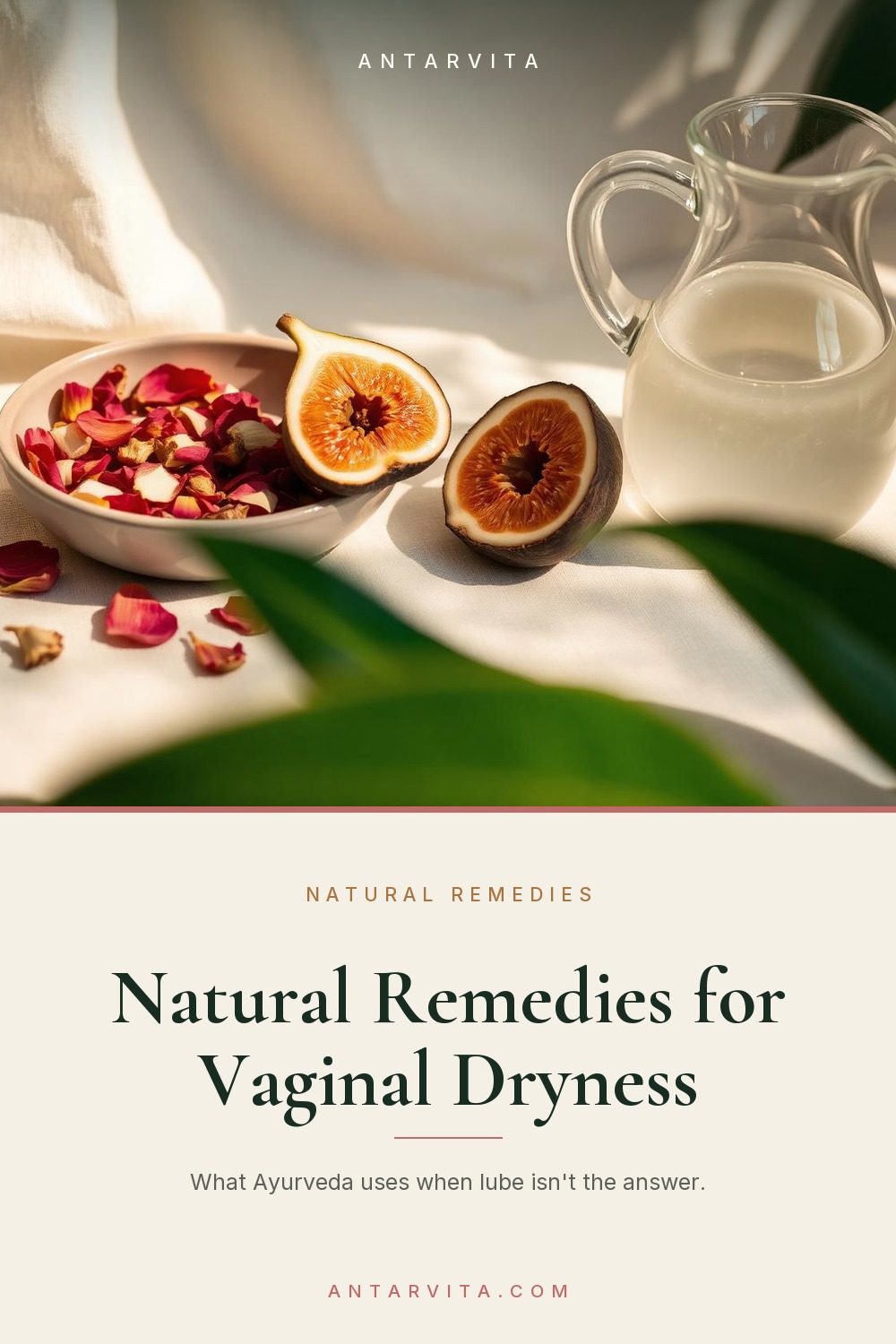
The herbs behind this article
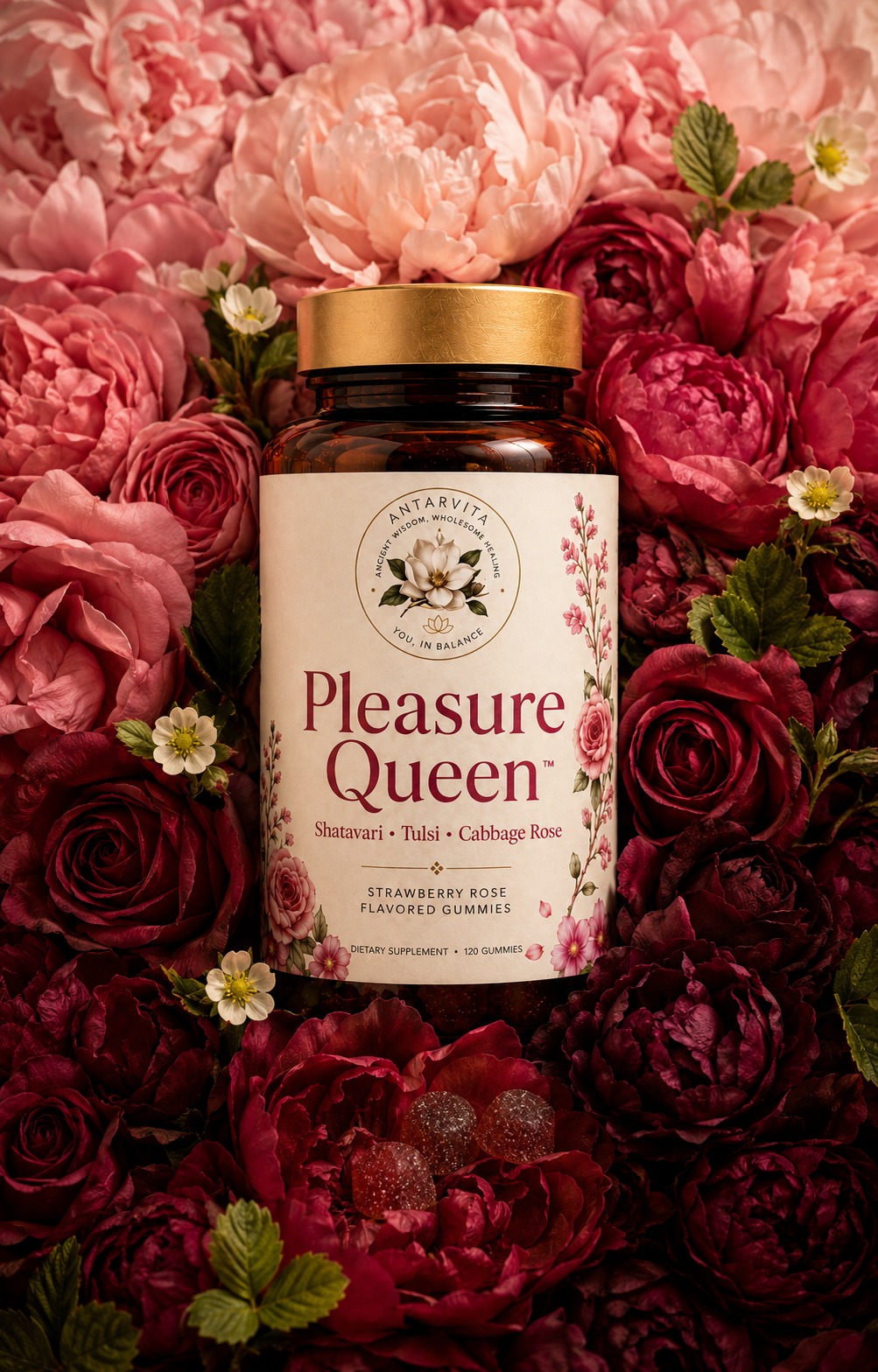
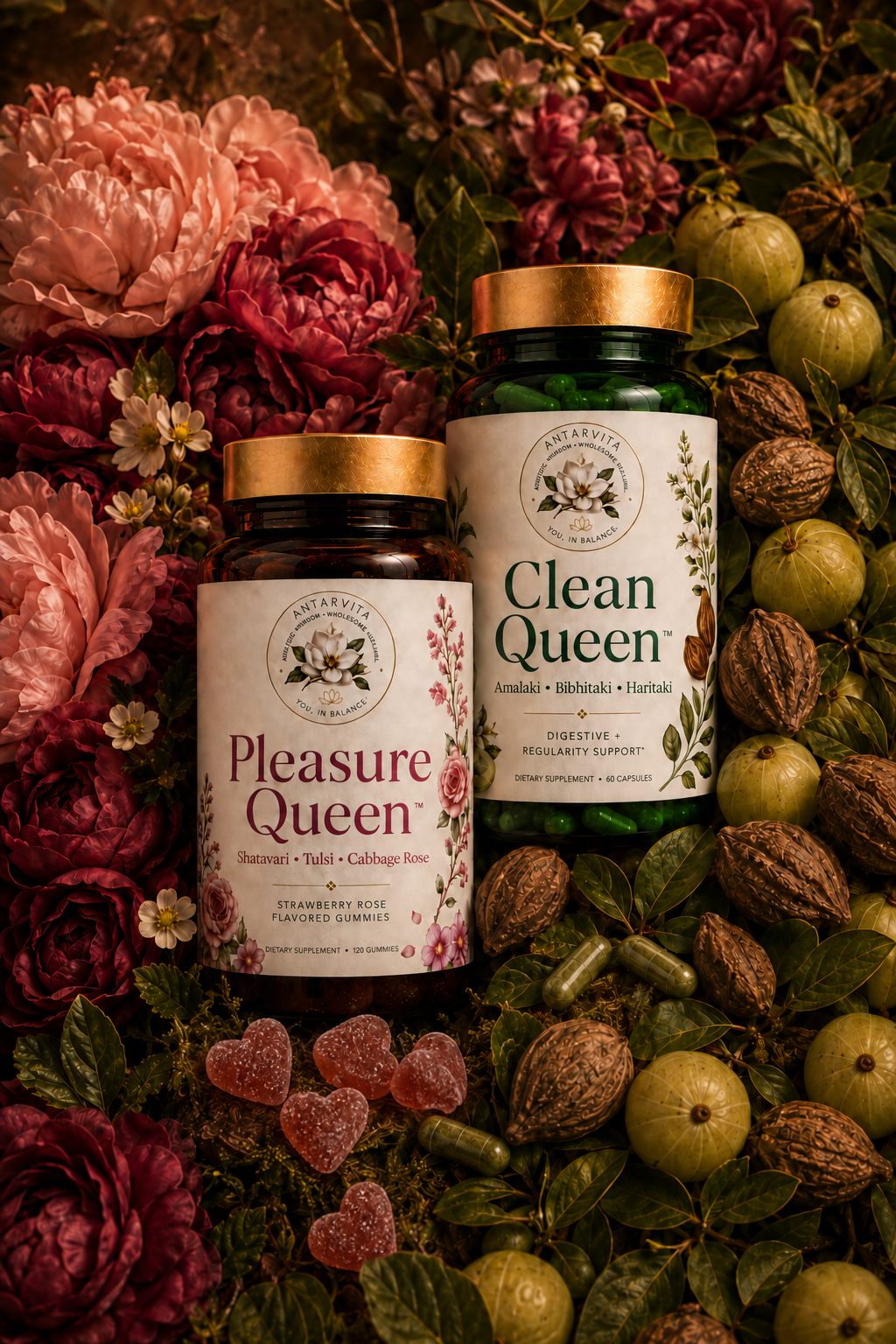
Begin to understand your body through an Ayurvedic lens
If you want to understand your body through a personalized Ayurvedic lens, begin with the Libido Body Type Quiz or explore a private Antarvita consultation.
References
- Pandey, A. K., et al. (2018). Asparagus racemosus (Shatavari) — A review of its clinical and pharmacological uses in women's health. https://pubmed.ncbi.nlm.nih.gov/29635127/
- The North American Menopause Society. Genitourinary syndrome of menopause: Position statement. https://www.menopause.org/publications/professional-publications/-position-statements-other-reports
- Lad, V. (2002). Textbook of Ayurveda, Volume One: Fundamental principles. The Ayurvedic Press. https://www.ayurveda.com/textbook-of-ayurveda-volume-one/