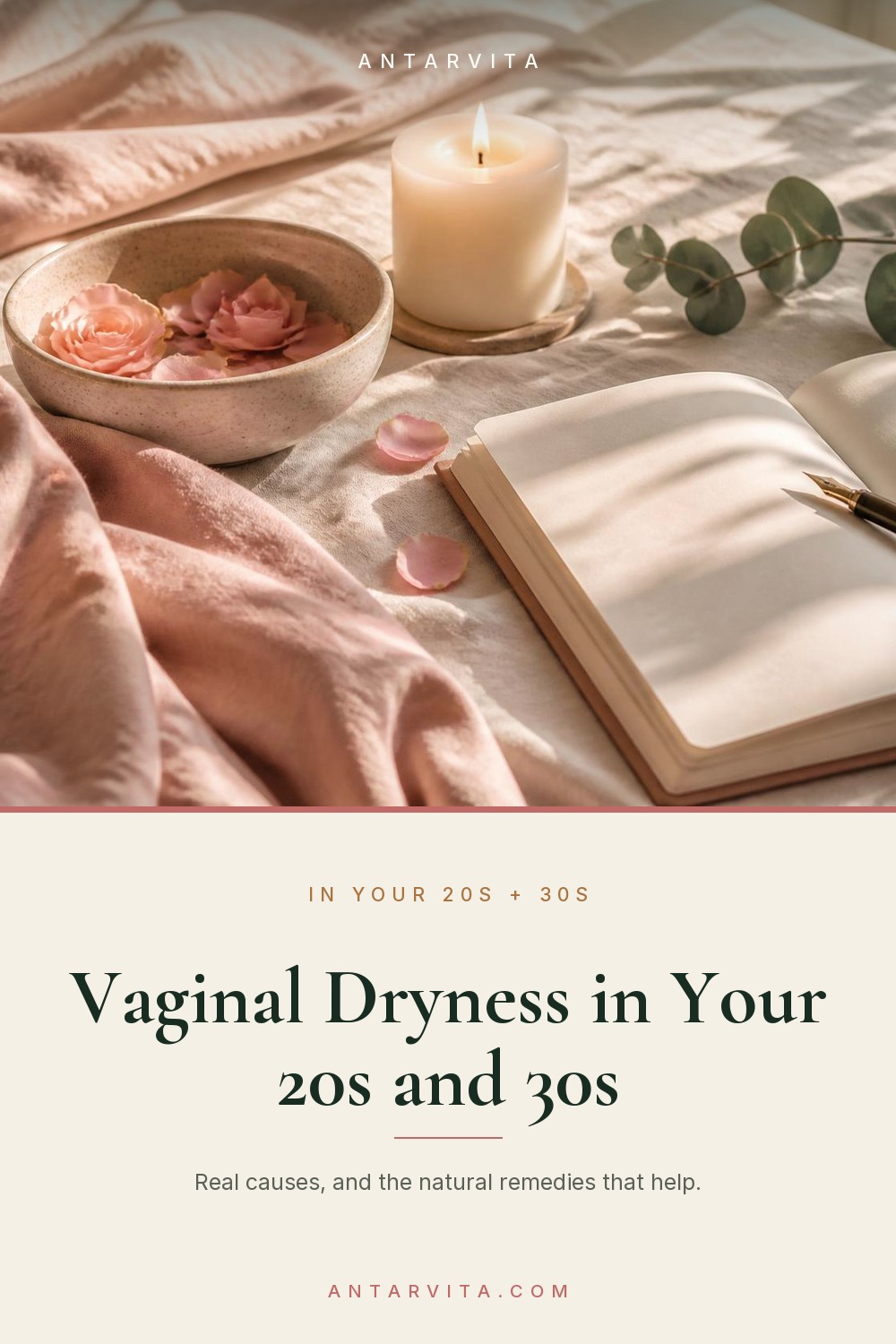
Vaginal Dryness in Your 20s and 30s

Nobody warned you this could happen at twenty-six. Every article you found was written for women thirty years older, and every one of them opened with the word menopause. So you closed the tab and assumed something was wrong with you.
Nothing is wrong with you. Your body is describing its conditions. In your twenties and thirties, dryness is almost never a hormonal ending — it is a signal about how you have been living, and it responds faster at this age than at any other.
Why young women lose moisture
Five patterns account for most of what walks into a consultation.
Hormonal birth control. The pill, the ring and some IUDs lower free testosterone and can thin the vaginal tissue over time. It is a well-documented effect and it is rarely mentioned at the prescribing appointment.
Chronic stress. A body running on adrenaline treats lubrication as optional. Moisture is a surplus function, and a nervous system in vigilance does not produce surplus.
Not enough fat. A decade of low-fat eating leaves the body without the raw material for hormones and for tissue that stays supple. Ghee, olive oil, avocado, nuts and full-fat dairy are not indulgences here; they are inputs.
Over-exercise and under-recovery. Daily high-intensity training on limited food is drying by design. It is the single most common pattern in women in their late twenties.
A dry, fast life. Cold coffee breakfasts, air conditioning, travel, screens, irregular sleep, meals eaten standing. Every one of those adds the same quality — light, dry, mobile.
The Ayurvedic reading
Ayurveda calls that quality Vata. Dry, light, cool, quick, changeable. When it accumulates, it shows up first wherever moisture is meant to live: skin, hair, joints, stool, and the vaginal tissue. Women with dryness almost always report the rest of the set — dry lips, cracking knuckles, constipation, cold hands, thoughts that will not slow down.
That is useful, because it means the remedy is not local. You do not rehydrate one part of a body that is dry everywhere. You bring moisture back to the whole system and the tissue follows.
What actually restores moisture
Oleation, inside and out. Warm sesame oil over the whole body before a shower, five minutes, most days. Externally, warm organic virgin coconut oil on the vulva at night. Patch test first, and note that oils degrade latex.
Shatavari daily. The classical rasayana for women, traditionally used for exactly this tissue. It is slow and cumulative — give it eight to twelve weeks of unbroken daily use before you judge it.
Fat at every meal. A teaspoon of ghee in warm food, soaked dates, soaked almonds, tahini. Warm and cooked over cold and raw, especially at breakfast.
An earlier, quieter night. Tissue is rebuilt in deep sleep. Ten pm is not a wellness cliche; it is when the repair window opens.
A conversation about your birth control. Not a directive to stop it — a conversation with your prescriber about whether the method you are on is contributing, and what the alternatives are.
When to see someone
Book an appointment if dryness comes with burning, unusual discharge, bleeding after sex, or pain that is getting worse rather than better. Those deserve a proper examination, and Ayurveda is not a substitute for one.
Give it a season
Most women feel the first shift in four to six weeks — softer skin, easier digestion, more warmth. Tissue-level change lands closer to twelve. That is not slow; that is the timeline of a body rebuilding rather than masking.
Your body is not failing you at twenty-eight. It is asking, plainly, for warmth, oil, fat and rest. Give it those and it will answer.
— Katy
Katy Kennedy, MS · Founder, Antarvita
Frequently asked questions
Is vaginal dryness normal in your 20s and 30s?
It is far more common than the conversation suggests. Hormonal birth control, chronic stress, over-exercise, low dietary fat and irregular routine all reduce moisture at any age. It is common, and it is responsive.
Can birth control cause vaginal dryness?
Yes. Combined hormonal contraceptives lower free testosterone and can thin vaginal tissue over time. Talk to your prescriber about whether your method may be contributing before you change anything.
What natural remedies work for vaginal dryness at a young age?
Daily warm-oil self-massage, external coconut oil at night, shatavari taken daily, adequate fat at every meal, warm cooked food and an earlier bedtime. Most women notice a shift in four to six weeks.
How long does it take to restore natural lubrication?
Four to six weeks for the first signs, and eight to twelve weeks for tissue-level change. Consistency matters far more than intensity.
When should I see a doctor about vaginal dryness?
If there is burning, unusual discharge, bleeding after sex, or pain that is worsening, get examined. Those symptoms need a diagnosis, not a herb.
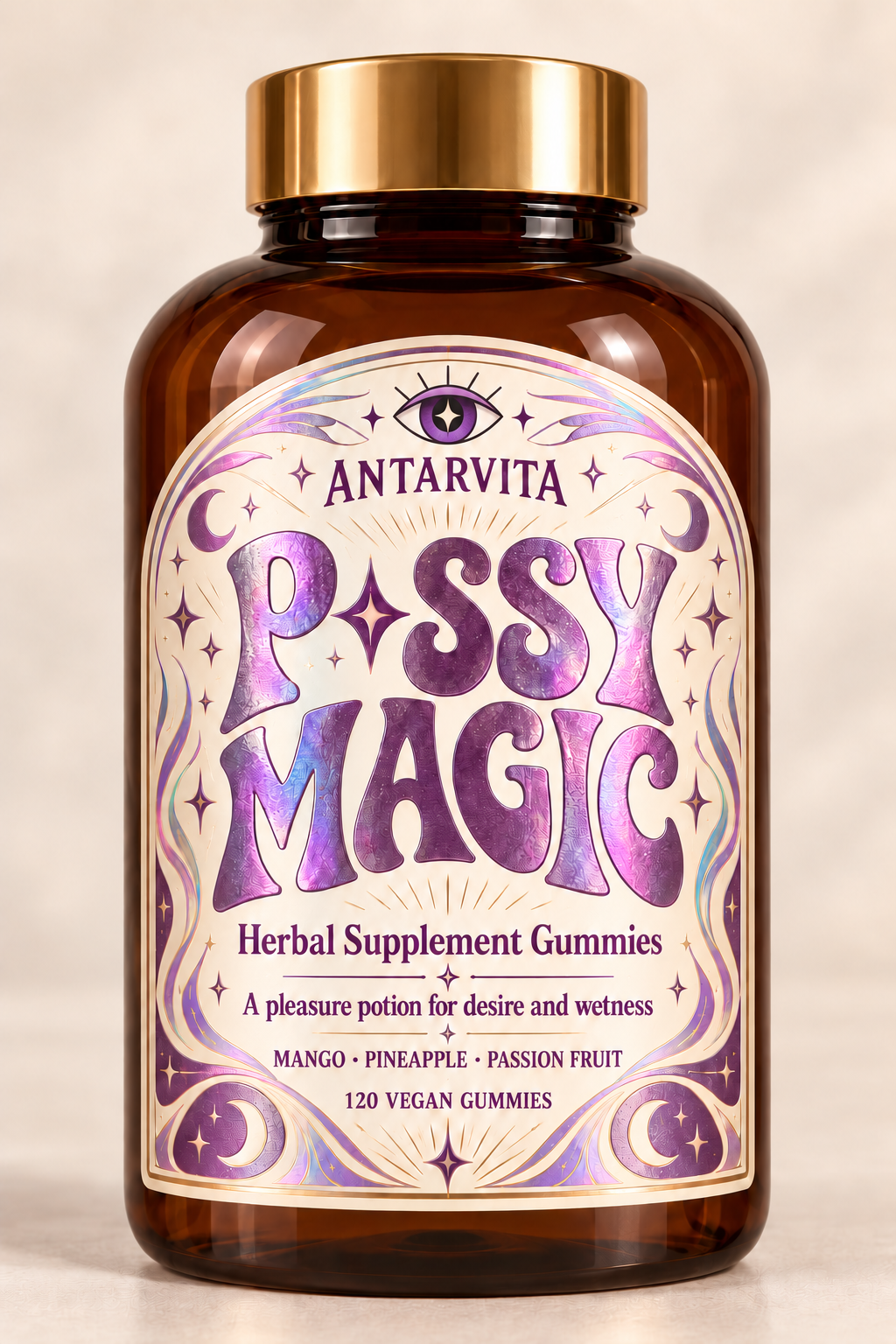
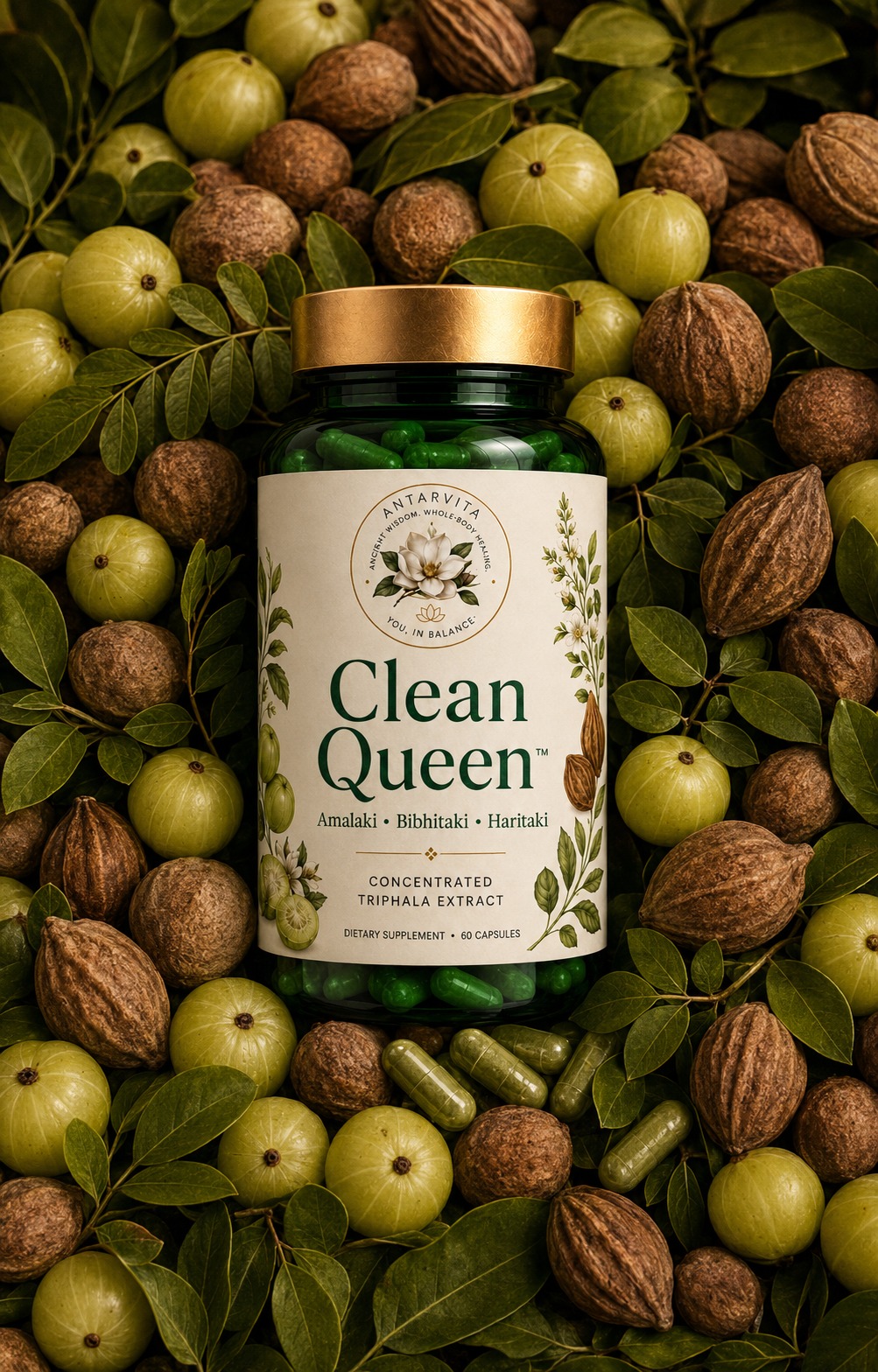
The herbs behind this article
Begin to understand your body through an Ayurvedic lens
If you want to understand your body through a personalized Ayurvedic lens, begin with the Libido Body Type Quiz or explore a private Antarvita consultation.
References
- Battaglia, C., et al. (2012). Sexual behavior and oral contraception: A pilot study. Journal of Sexual Medicine, 9(2), 550–557. https://pubmed.ncbi.nlm.nih.gov/22111752/
- Alok, S., et al. (2013). Plant profile, phytochemistry and pharmacology of Asparagus racemosus (Shatavari): A review. Asian Pacific Journal of Tropical Disease, 3(3), 242–251. https://pmc.ncbi.nlm.nih.gov/articles/PMC4027291/
- Goldstein, I., et al. (2013). Hypoactive sexual desire disorder: International Society for the Study of Women's Sexual Health expert consensus panel review. Mayo Clinic Proceedings, 92(1), 114–128. https://pubmed.ncbi.nlm.nih.gov/27916394/