How Getting Dirty With Mother Nature Heals Your Gut

There is a reason your shoulders drop the moment you step barefoot onto grass. It is not nostalgia. It is not a cute wellness trend. Your body is recognizing something it has known for millennia: you were made to touch the earth.
In Ayurveda, the gut is not a machine that processes calories. It is agni — your digestive fire, the seat of transformation, the place where food becomes tissue, thought becomes energy, and foreign material becomes either nourishment or waste. When agni is strong, you feel it everywhere: clear skin, steady mood, reliable energy, a cycle that arrives without drama. When agni is weak, the body begins to whisper, then to signal, then to shout.
One of the most overlooked ways to rebuild that fire is not another supplement. It is contact with living soil.
Your gut is an ecosystem, not a plumbing system
Modern conversation about gut health tends to focus on elimination diets, probiotics, and what to remove. But your microbiome is not a problem to be sanitized. It is a living ecosystem — trillions of organisms that communicate with your immune system, your nervous system, your hormones, and even the way you metabolize stress.
Research now shows that the microbial worlds of soil, plants, and the human gut are not separate. They share species, signals, and survival strategies. Soil is one of the most biodiverse microbial habitats on earth, and human populations with greater contact with soil and animals consistently show richer, more resilient gut microbiomes (Blum, Zechmeister-Boltenstern & Keiblinger, 2019).
In other words: the health of your inner soil and the health of the outer soil are connected. When one is depleted, the other feels it.
The bacterium that calms the nervous system
One soil organism in particular has captured researchers' attention: Mycobacterium vaccae, a harmless bacterium commonly found in soil. Studies in animals show that exposure to this bacterium reduces anxiety-like behavior, improves stress coping, and dampens inflammation in the central nervous system (Reber et al., 2016; Frank et al., 2018).
The proposed mechanism is elegant: soil-derived microbes interact with immune cells that regulate inflammation, and inflammation is now understood to be one of the root drivers of anxiety, depression, and brain fog. By exposing yourself to biodiverse soil, you are not just growing tomatoes. You are bathing your immune system in the very signals that teach it to calm down.
You do not need to inject anything or take a pill. You need to kneel, dig, plant, and harvest. The contact is the medicine.
Gardening lowers cortisol faster than you think
In a now-classic study, researchers had participants complete a stressful task and then assigned them to either 30 minutes of gardening or 30 minutes of reading. The gardeners experienced a significantly stronger drop in cortisol and reported better mood afterward (van den Berg & Custers, 2011).
A 2024 umbrella review of gardening research confirmed the pattern across multiple populations: gardening is associated with reduced depression and anxiety symptoms, improved quality of life, better social connection, and lower stress (Ronaldson et al., 2024).
For women especially, this matters. Your gut and your nervous system share a single conversation. Chronic stress tightens digestion, slows motility, depletes beneficial bacteria, and increases intestinal permeability. A practice that lowers cortisol while simultaneously exposing you to microbiome-supporting soil is doing two forms of healing at once.
Homegrown food carries what the shelf cannot
There is a nutritional argument for growing your own food that goes beyond freshness. Vegetables begin losing nutrients the moment they are harvested. By the time a supermarket tomato reaches your kitchen, it may have traveled thousands of miles and spent weeks in cold storage. Homegrown produce, picked at peak ripeness, retains higher levels of vitamin C, polyphenols, and other phytonutrients that support gut integrity and immune function.
More importantly, the soil your food grows in shapes what it becomes. Plants grown in mineral-rich, biologically active soil pull up a wider spectrum of micronutrients than plants grown in depleted, chemically managed soil. You are not just eating a vegetable. You are eating the health of the soil it came from.
This is why Ayurveda has always emphasized the source of food. A carrot from living soil carries prana — life force — in a way a plastic-wrapped carrot cannot. Your gut recognizes the difference even if your mind does not.
Grounding: the body plugged back into the earth
Direct skin contact with the earth — called grounding or earthing — has been studied for its effects on inflammation, sleep, pain, and autonomic balance. Research suggests that grounding reduces markers of inflammation and normalizes cortisol rhythms, possibly by allowing the body to exchange electrons with the earth's surface (Oschman, Chevalier & Brown, 2015).
You do not need special equipment. You need bare feet on soil, hands in compost, knees in grass. The earth is not a surface to stand on. It is a living system you are part of.
The feminine wisdom of cycles
There is something deeply feminine about gardening. It asks you to work with cycles rather than override them. Seed, sprout, flower, fruit, decay, rest. Your body knows this language. Your cycle is not a design flaw; it is a rhythm. Your digestion is not a machine; it is a fire that waxes and wanes with the season, the moon, and your own stress load.
When you garden, you remember that you are not meant to be efficient. You are meant to be in relationship — with soil, with food, with the microbes that live on and inside you, with the part of yourself that still knows how to receive.
How to begin, even if you have no yard
You do not need acreage. You need contact. Start here:
One pot of herbs. Basil, mint, cilantro, or rosemary on a windowsill still connects you to the cycle of growth. Touch the leaves. Smell them before you eat.
Bare feet on grass. Ten minutes a day. Let the earth hold you.
Eat something raw from a garden. A farmers' market counts. Notice how alive it feels compared to packaged food.
Get your hands dirty without apology. Soil under your nails is not unkempt. It is evidence that you are still in conversation with the living world.
Your gut is asking you to return
If your digestion has been uncertain, your energy flat, your mood brittle, your body is not broken. It is signaling. It is asking for inputs it recognizes: real food, real soil, real rest, real contact.
The garden is not an escape from your body. It is a return to it. And the dirt under your fingernails? That is not mess. That is medicine.
— Katy
Katy Kennedy, MS · Founder, Antarvita
Frequently asked questions
Can gardening really improve gut health?
Yes. Gardening exposes you to soil microbes that support immune regulation, lowers cortisol, encourages movement, and often leads to eating more fresh plants. All of these influence the gut microbiome and digestive function.
What is Mycobacterium vaccae and why does it matter?
Mycobacterium vaccae is a harmless soil bacterium. Animal studies show it can reduce anxiety-like behavior and inflammation, likely by interacting with immune cells that regulate stress responses.
Are homegrown vegetables more nutritious than store-bought?
Often, yes. Produce harvested at peak ripeness and eaten soon after retains more vitamin C, antioxidants, and phytonutrients than produce harvested early and stored for long transport.
What if I do not have a garden?
A windowsill herb pot, a community garden plot, or even regular visits to a local farm can provide many of the same benefits. The key is contact with living plants and soil, not the size of your space.
How does grounding or earthing help the body?
Direct skin contact with the earth appears to reduce inflammation markers and normalize cortisol rhythms. It is a simple, free practice that complements other gut-healing work.
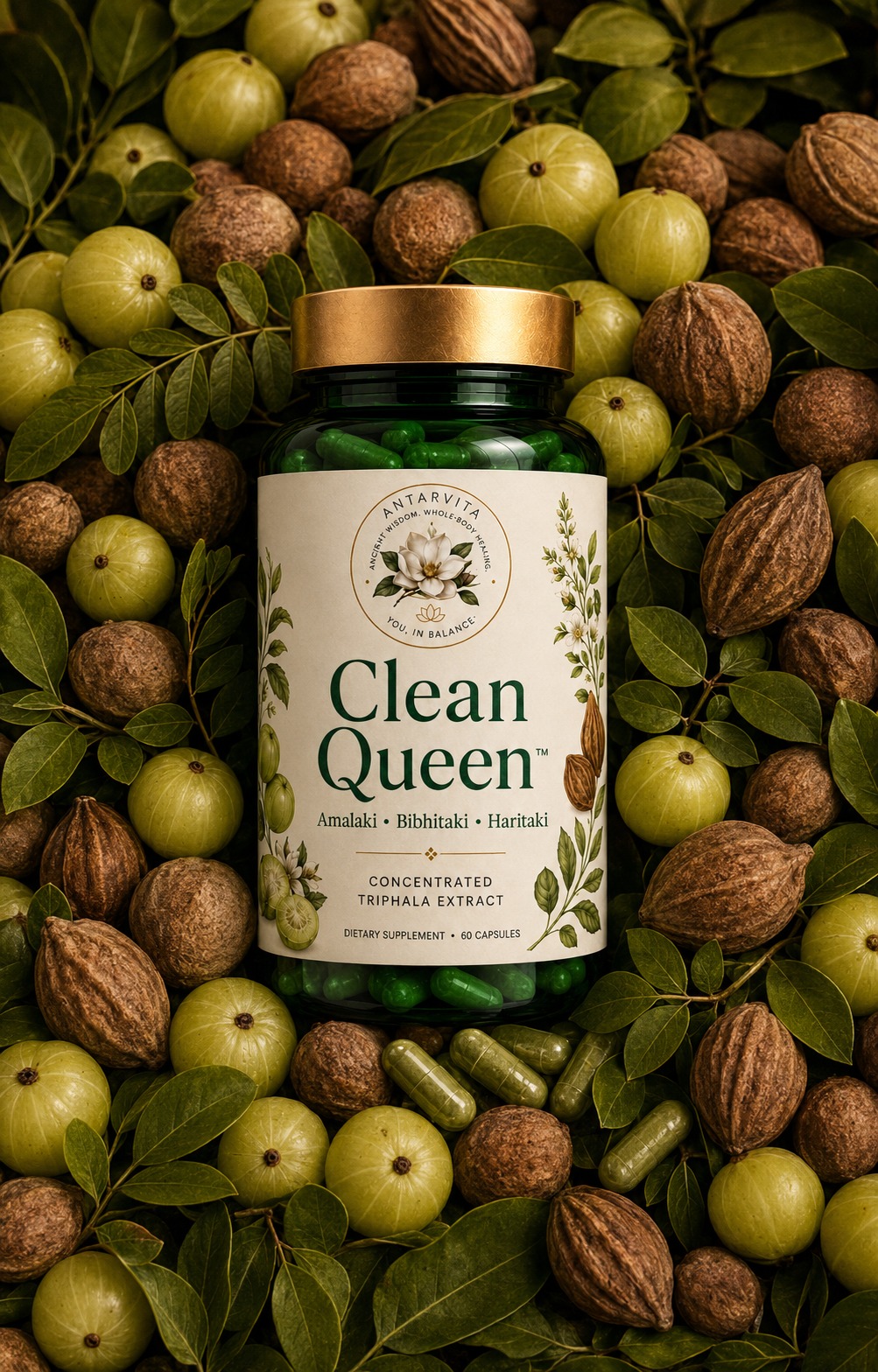
The herbs behind this article

Begin to understand your body through an Ayurvedic lens
If you want to understand your body through a personalized Ayurvedic lens, begin with the Libido Body Type Quiz or explore a private Antarvita consultation.
References
- Blum, W. E. H., Zechmeister-Boltenstern, S., & Keiblinger, K. M. (2019). Does soil contribute to the human gut microbiome? Microorganisms, 7(9), 287. https://pmc.ncbi.nlm.nih.gov/articles/PMC6780873/
- Frank, M. G., Fonken, L. K., Watkins, L. R., & Maier, S. F. (2018). Immunization with Mycobacterium vaccae induces an anti-inflammatory milieu in the CNS: Attenuation of stress-induced microglial priming, alarmins and anxiety-like behavior. Brain, Behavior, and Immunity, 73, 95–104. https://pmc.ncbi.nlm.nih.gov/articles/PMC6129419/
- Oschman, J. L., Chevalier, G., & Brown, R. (2015). The effects of grounding (earthing) on inflammation, the immune response, wound healing, and prevention and treatment of chronic inflammatory and autoimmune diseases. Journal of Inflammation Research, 8, 83–96. https://pmc.ncbi.nlm.nih.gov/articles/PMC4378297/
- Reber, S. O., Siebler, P. H., Donner, N. C., et al. (2016). Immunization with a heat-killed preparation of the environmental bacterium Mycobacterium vaccae promotes stress resilience in mice. Proceedings of the National Academy of Sciences, 113(22), 3130–3139. https://www.pnas.org/doi/abs/10.1073/pnas.1600324113
- Ronaldson, A., Sima, N., Dregan, A., & Sima, R. (2024). The impact of gardening on well-being, mental health, and quality of life: An umbrella review and meta-analysis. Systematic Reviews, 13, 45. https://pmc.ncbi.nlm.nih.gov/articles/PMC10823662/
- van den Berg, A. E., & Custers, M. H. G. (2011). Gardening promotes neuroendocrine and affective restoration from stress. Journal of Health Psychology, 16(1), 3–11. https://doi.org/10.1177/1359105310365577