Inflammation Is Not the Enemy. It's a Message.
Somewhere in the last decade, inflammation became the villain of women's wellness. You'll find it on supplement labels, in functional medicine intake forms, in the comment sections of every health podcast. Reduce inflammation. Fight inflammation. Eliminate inflammation.
I want to offer a different frame entirely — because the way we talk about inflammation is keeping a lot of women stuck.
Your body is not attacking itself
Inflammation is one of the most sophisticated and necessary processes in human biology. When you sprain an ankle, cut your finger, or fight off an infection, inflammation is what mobilizes your immune system, recruits healing resources, and begins the repair process. Without it, wounds don't close. Pathogens go unchecked. The body cannot heal.
Acute inflammation is not the problem. It is the solution.
What we're actually talking about — what most women are experiencing when they feel puffy, achy, foggy, hormonally scattered, and exhausted — is chronic low-grade inflammation. And this is an entirely different conversation. Not because it's more dangerous, but because it means something different. Chronic inflammation is not your body malfunctioning. It is your body sending a sustained signal that something in its environment — something it's being asked to process repeatedly — is more than it can return to balance from.
It is not the enemy. It is information.
What Ayurveda hears in that signal
In Ayurvedic physiology, what Western medicine identifies as chronic inflammation often corresponds to an accumulation of Ama — unprocessed material in the body that builds when digestion is compromised, when the system is asked to handle more than it can metabolize. This might be food that doesn't suit your constitution, a nervous system that never fully downregulates, a sleep pattern that doesn't allow for full tissue restoration, or a pace of life that chronically outpaces your body's capacity to recover.
Ama is not a disease. It is evidence that something has been pulling the system out of balance for long enough that the body can no longer quietly correct for it.
This distinction matters enormously for how we respond. If inflammation is the enemy, the ritual is suppression — anti-inflammatory supplements, elimination diets, interventions aimed at quieting the signal. If inflammation is a message, the ritual is entirely different: we ask what the body is responding to, and we address that.
The question that changes the ritual
When I review your intake, I'm not looking for markers to suppress. I'm looking for what your specific constitution has been asked to process that it cannot fully clear. For some women, this is a long-standing dietary pattern that creates dampness and congestion in a Kapha body. For others, it's a Pitta constitution running too hot for too long — driven, perfectionistic, not sleeping, not stopping. For others still, it's a Vata nervous system that has been dysregulated for so long that the body has lost its ability to return to baseline without support.
The ritual doesn't fight the inflammation. It removes what's been creating the environment for it. When the load decreases, the signal quiets — not because it was suppressed, but because the body no longer needs to send it.
That is the difference between treating the message and reading it.
— Katy
Katy Kennedy, MS · Founder, Antarvita
Frequently asked questions
What are the signs of chronic inflammation in women?
Common patterns include persistent bloating, cystic breakouts along the jaw, morning joint stiffness, afternoon energy crashes, heavier or more painful cycles, and skin that flushes easily.
How does Ayurveda reduce inflammation naturally?
By cooling the source rather than muting the symptom: earlier and lighter dinners, cooked over raw food, ghee and bitter greens, a consistent sleep window, and herbs matched to your constitution.
Which foods calm inflammation fastest?
Warm cooked vegetables, ghee, cilantro, coconut, fennel, cumin, coriander and bitter greens. Reduce alcohol, fermented foods, aged cheese, nightshades and late-night eating while things settle.
How long before inflammation settles?
Digestive and skin signals often ease within three to six weeks of consistent change. Joint and cycle patterns typically need a full two to three cycles.
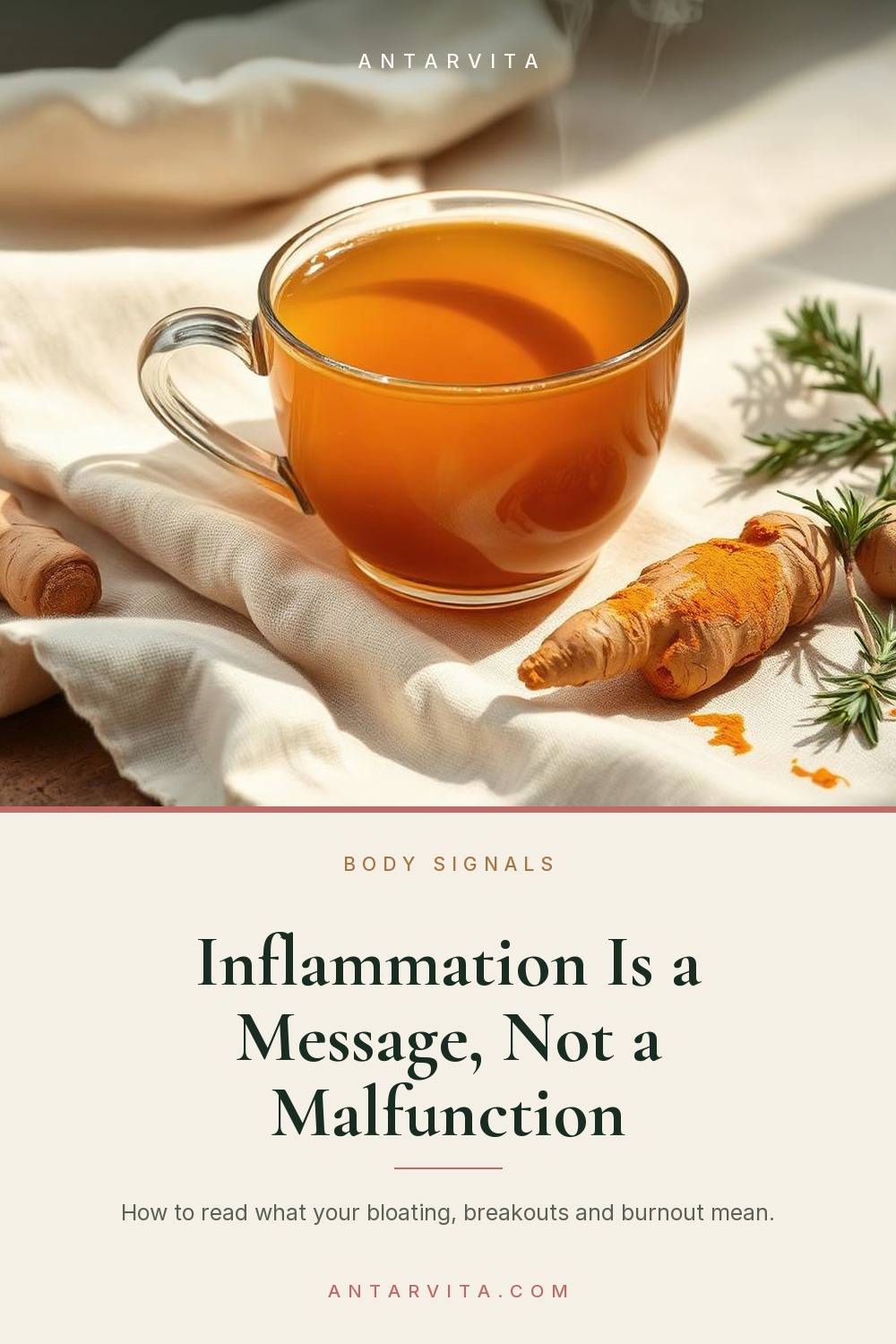
The herbs behind this article
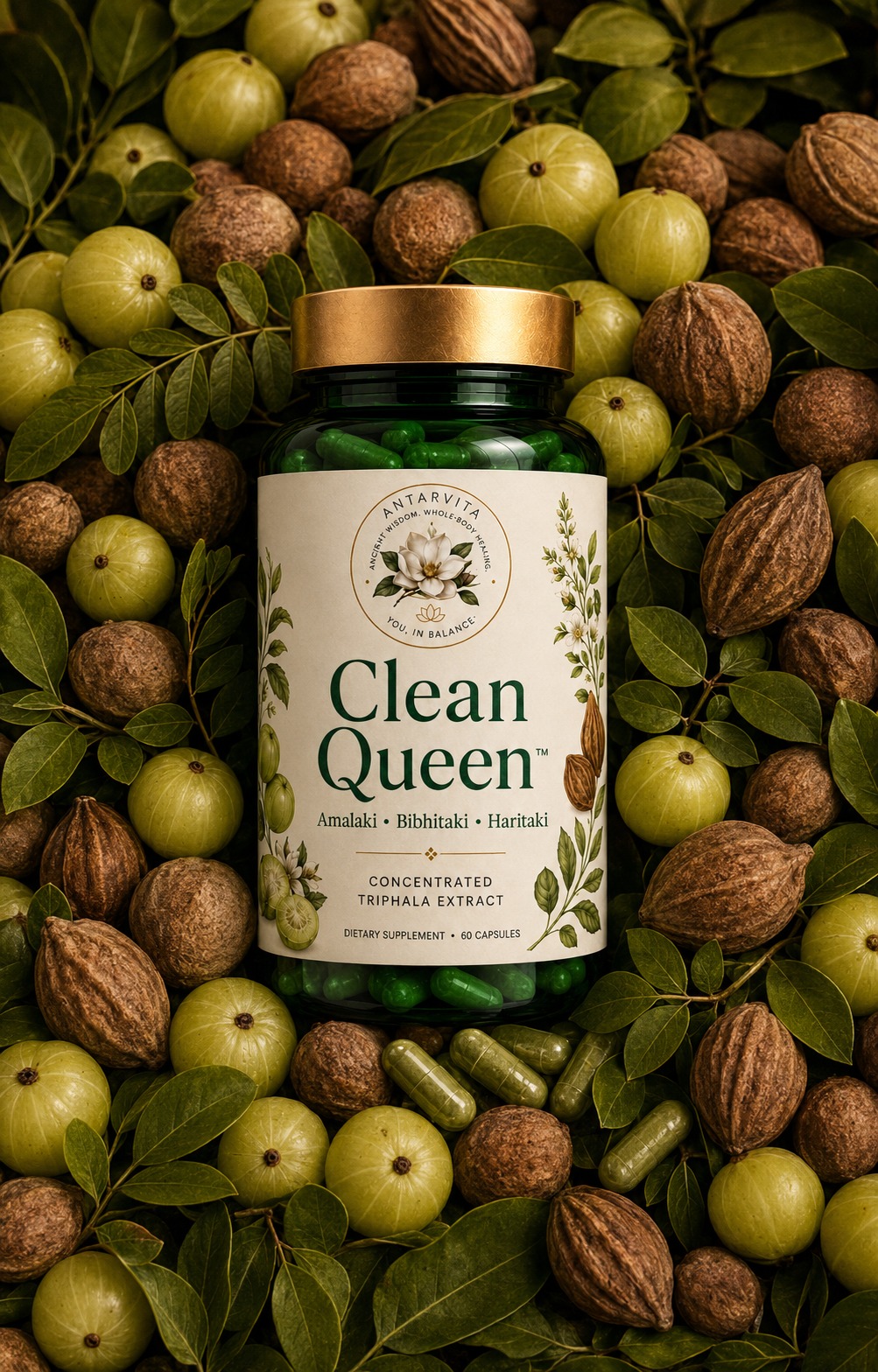
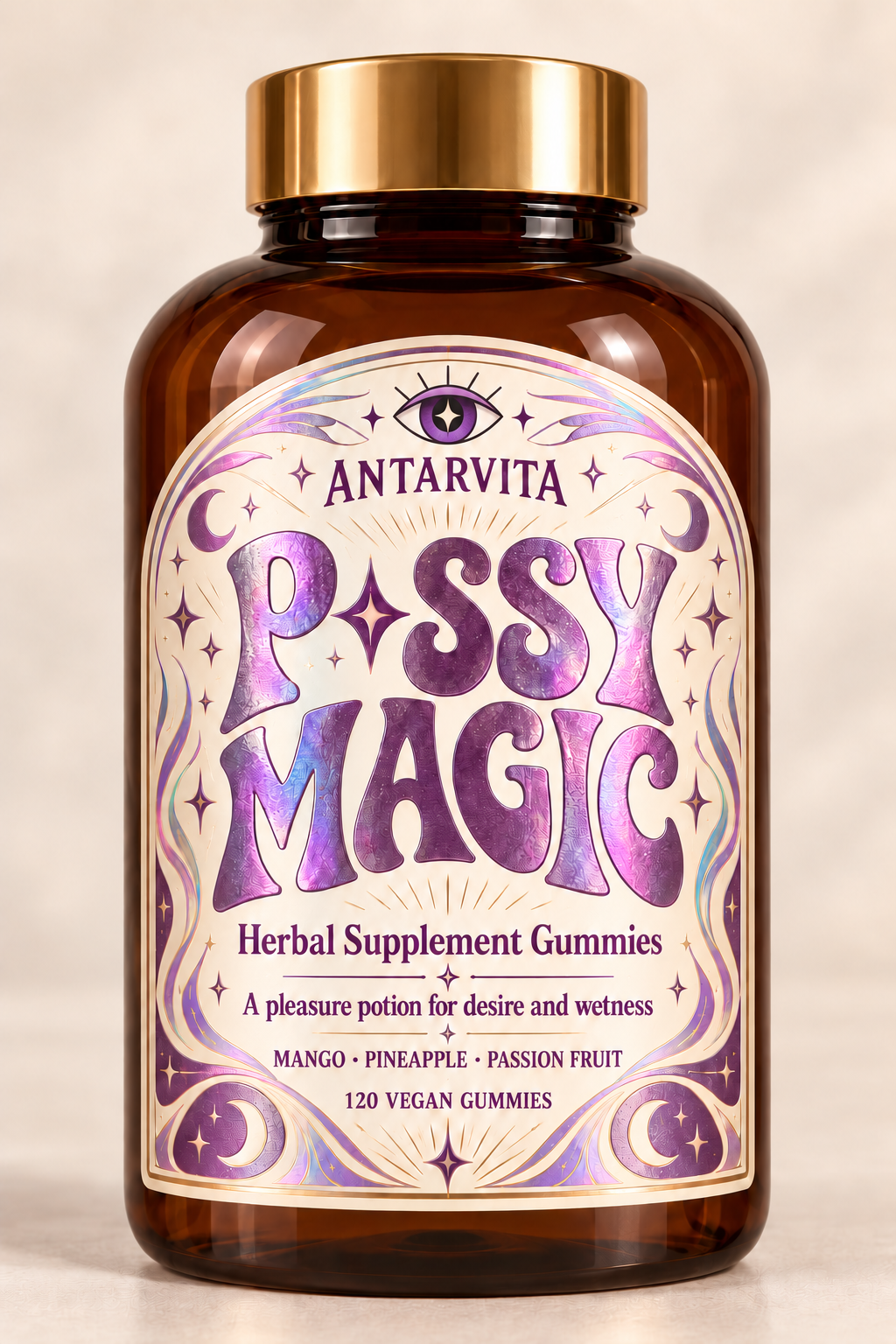
Begin to understand your body through an Ayurvedic lens
If you want to understand your body through a personalized Ayurvedic lens, begin with the Libido Body Type Quiz or explore a private Antarvita consultation.
References
- Medzhitov, R. (2008). Origin and physiological roles of inflammation. Nature, 454(7203), 428–435. https://doi.org/10.1038/nature07201
- Aggarwal, B. B., & Harikumar, K. B. (2009). Potential therapeutic effects of curcumin. International Journal of Biochemistry & Cell Biology, 41(1), 40–59. https://doi.org/10.1016/j.biocel.2008.06.010
- Minihane, A. M., et al. (2015). Low-grade inflammation, diet composition and health. British Journal of Nutrition, 114(7), 999–1012. https://doi.org/10.1017/S0007114515002093
- Furman, D., et al. (2019). Chronic inflammation in the etiology of disease across the life span. Nature Medicine, 25(12), 1822–1832. https://doi.org/10.1038/s41591-019-0675-0