Vata & Nervous System Regulation at Every Stage of Life
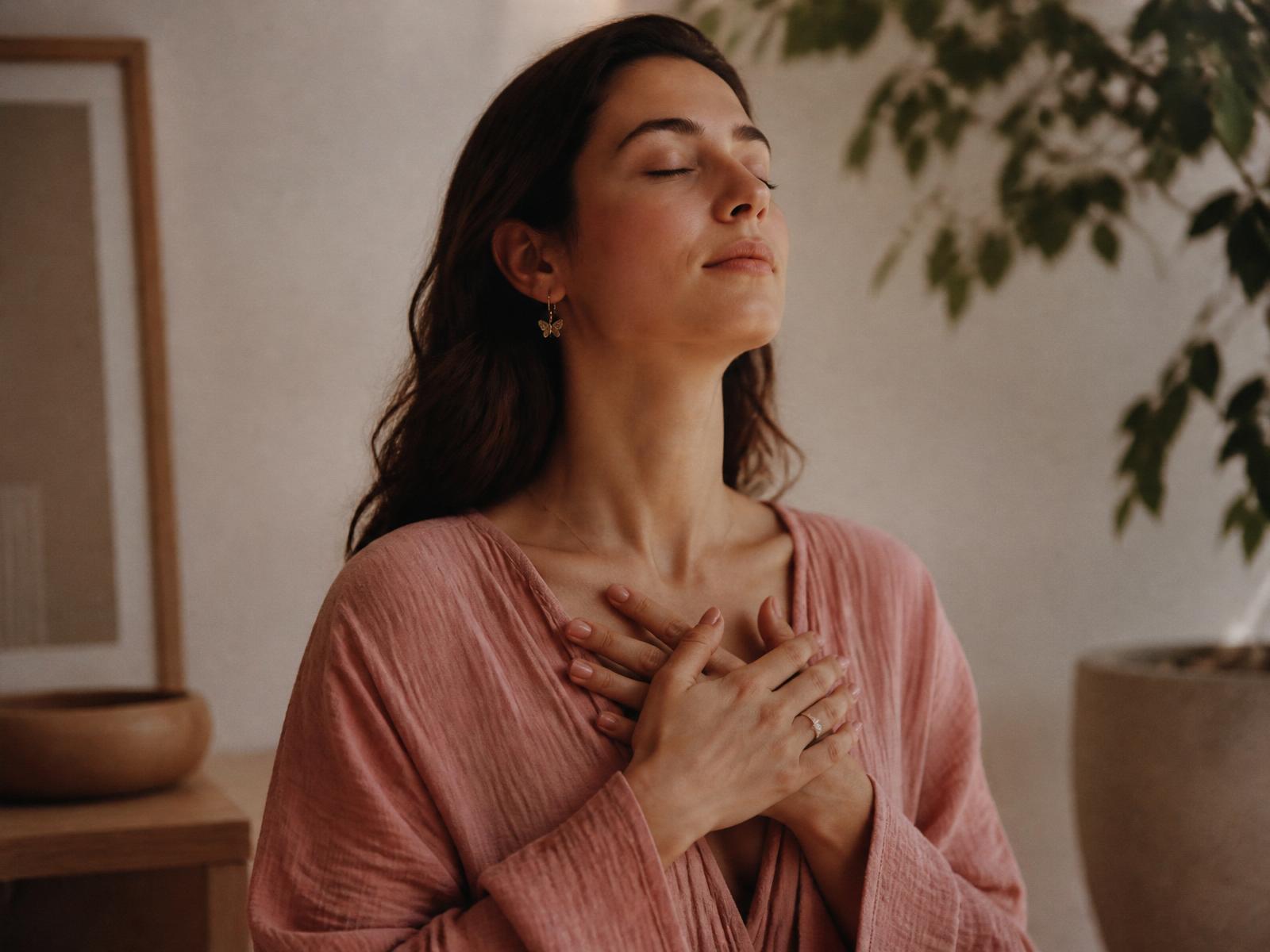
There's a Sanskrit saying that when Vata is in balance, everything moves. When it's disturbed, everything moves too much. That is a very old way of describing what modern medicine now calls a dysregulated nervous system.
In Ayurveda, Vata is the dosha of air and ether — the subtle force that governs movement, communication, and the electrical intelligence of the nervous system. It is the wind that moves thought across the brain, breath through the lungs, impulses through the vagus nerve, blood through the pelvis, and hormones through the bloodstream. When it is steady, you feel steady. When it is scattered, so are you — racing thoughts, poor sleep, cold hands, constipation, cycle irregularity, anxiety that seems to arrive from nowhere.
Vata is also the dosha most affected by the shape of a modern woman's life: constant input, irregular hours, cold food, cold rooms, cold devices held up to a warm face at midnight. And it is the dosha that shifts most dramatically as we age. Every stage of a woman's life brings a new relationship with Vata — and a new definition of what nervous system regulation actually requires.
Here is what changes, and one grounded ritual for every stage.
Teen Years: The First Vata Wave
The teen years are governed by Kapha in tissue and Pitta in fire, but they are the first time Vata takes the wheel of the nervous system. Puberty is essentially a Vata event — rapid movement, rapid change, rapid emotion. Add in academic pressure, phones, disrupted sleep, and social intensity, and a teenage nervous system is often running hot and scattered at the same time.
The signs of early Vata dysregulation in a teenage girl are subtle: skipped meals, anxious mornings, irregular first periods, cold hands and feet, difficulty falling asleep. This is not a personality problem. This is a nervous system that hasn't yet been taught how to land.
The tip: A warm, cooked breakfast every single morning — even a small one. Oatmeal with ghee and cinnamon, or eggs cooked in butter with toast. Cold cereal and iced coffee are Vata accelerators for a body that is already moving too fast. A warm breakfast is the earliest, cheapest form of nervous system regulation a young woman can learn.
Young Adult: The Wired-and-Tired Decade
The twenties are typically the most Vata-provoking decade of a woman's life. New city. New job. New apartment. New relationships. Everything is moving. And most of the standard coping mechanisms — coffee, alcohol, cold-pressed juice, HIIT classes at 6am, four-hour phone days — are themselves Vata-aggravating.
This is the decade when women first start to feel that their nervous system is somehow "on." They can't drop into sleep. They can't stop scrolling. Their cycle is fine but their mind isn't. Anxiety enters the vocabulary. This is not a mental health failure. This is a nervous system running on high Vata inputs for years without a reset.
The tip: A nightly warm oil foot massage — abhyanga. Two tablespoons of warm sesame or almond oil, rubbed into the feet for three minutes before bed, socks on. This one ritual downshifts the vagus nerve more reliably than any supplement in the twenties. It's free, it takes three minutes, and it will rewire the way you sleep.
New Mom: Vata at Its Most Vulnerable
The postpartum window is, in Ayurvedic terms, the single most Vata-elevated moment of a woman's life. The uterus has just emptied — literally leaving space where there was tissue. Sleep is broken. Meals are skipped. Blood volume drops. The body is cold, dry, and hollow in the exact ways Vata thrives on.
This is why classical Ayurveda protects the first forty-two days after birth with an extraordinary amount of care: warm oil, warm food, warm rooms, warm hands. Postpartum anxiety, insomnia, and the flat exhaustion many women describe are not personal weaknesses. They are unmanaged Vata in an unmanaged nervous system.
The tip: Warm, wet, unctuous food at every meal for the first year. Oatmeal with ghee. Kitchari. Stewed apples with cardamom. Soups. Cooked greens with olive oil. Skip raw salads, iced drinks, and crackers-as-lunch — they are Vata rocket fuel in a body that has none to spare. Feed the nervous system the way you would feed the baby: warm, soft, on schedule.
New Career: The Cognitive Vata Years
The thirties and early forties are what I call the cognitive Vata decade — the years when a woman is often carrying a career, a household, aging parents, and possibly small children all at once. Vata expresses itself less in the body and more in themind during this stage: mental clutter, forgotten appointments, the "I have thirty tabs open in my head" feeling, waking at 3am with a to-do list, the sense that you cannot finish a thought.
This is the stage where women start Googling "nervous system regulation" for the first time. It is also the stage where they most often reach for adaptogens and supplements before addressing the actual inputs that are lighting Vata up.
The tip: Anchor your day with three non-negotiable times — wake, eat, sleep. Same time every day, within a thirty-minute window. Vata is chaos; it can only be tamed by rhythm. A woman with a wildly irregular schedule cannot supplement her way to a regulated nervous system. Regularity is the medicine. Everything else is support.
Perimenopause & Menopause: The Second Vata Wave
Ayurveda categorizes the second half of a woman's life as her Vata years. As estrogen declines, the moistening, grounding, tissue-building forces of the body decline with it. The result — dryness, thinning hair, restless sleep, waking anxiety, joint creakiness, changes in memory, the sudden feeling of being "unmoored" — is not random. It is Vata rising into a body that no longer has estrogen to buffer it.
Most women in this stage have never been taught that their symptoms are constitutional, not psychiatric. Menopausal anxiety is not a new disorder appearing at fifty. It is the same nervous system, in a suddenly drier body, without its former hormonal cushion.
The tip: Daily oleation, inside and out. A tablespoon of ghee in warm milk or oatmeal in the morning, and a full-body warm oil massage two to three times a week before showering. Oil is the antidote to Vata. In perimenopause and menopause, oil is quite literally what replaces the moisture and grounding your hormones used to provide.
Retirement & Beyond: The Elder Vata Stage
After sixty, Vata governs the body outright. Skin thins. Bones lighten. Sleep grows shorter. Digestion cools. This is the natural, unavoidable trajectory of aging in Ayurvedic terms — and it is exquisitely responsive to gentle, consistent care. The women who age with steadiness, warmth, and clarity are almost always the women who learned to manage their Vata a decade or two earlier.
Nervous system regulation in this stage looks like less input, not more. Less news. Less scrolling. Less rushing. More warmth, more silence, more sunlight on the skin, more time in the company of people who don't hurry you.
The tip: Ten minutes of morning sun on the skin, and a warm cup of something — spiced milk, ginger tea, broth — with real quiet around it. No phone. No news. This is the elder woman's version of vagal toning: warmth, light, and the absence of noise. It is enough.
The Common Thread
Across every stage of a woman's life, the tools for nervous system regulation are the same at their root: warmth, oil, rhythm, and quiet. What changes is the dose, the emphasis, and the entry point. A teen needs breakfast. A new mother needs stewed apples. A woman in perimenopause needs a body slick with sesame oil. An elder needs the sun and silence.
If your nervous system feels dysregulated right now — anxious, wired, scattered, dry, unable to land — the answer is not another supplement. The answer is to look at what stage of life you are actually in, what Vata is asking for at this stage, and then to do that one thing consistently for long enough that the nervous system believes you.
Regulation is not a state. It is a rhythm. And rhythm, at every age, is exactly what Vata has been asking for all along.
Educational content only. This article is not medical advice, diagnosis, or treatment. Please consult a qualified healthcare practitioner before beginning any herbal, dietary, or wellness protocol, especially if pregnant, breastfeeding, taking medication, or managing a medical condition.
— Katy
Katy Kennedy, MS · Founder, Antarvita
Frequently asked questions
What are the signs of high Vata?
Racing thoughts, anxiety, dry skin and hair, constipation, bloating, cold hands and feet, irregular appetite, light interrupted sleep and waking around 3am.
How do I calm Vata quickly?
Warm oil on the skin, a warm cooked meal, something heavy over your body, and going to bed at the same time. Vata settles through the senses, not through reasoning with it.
Why does Vata increase with age?
In Ayurveda the later decades are the Vata stage of life — naturally drier, lighter and more mobile. That is why warmth, oil and routine matter more each decade.
What is abhyanga and how often should I do it?
Abhyanga is self-massage with warm oil, traditionally sesame for Vata. Daily is ideal; three to four times a week is still meaningfully calming.
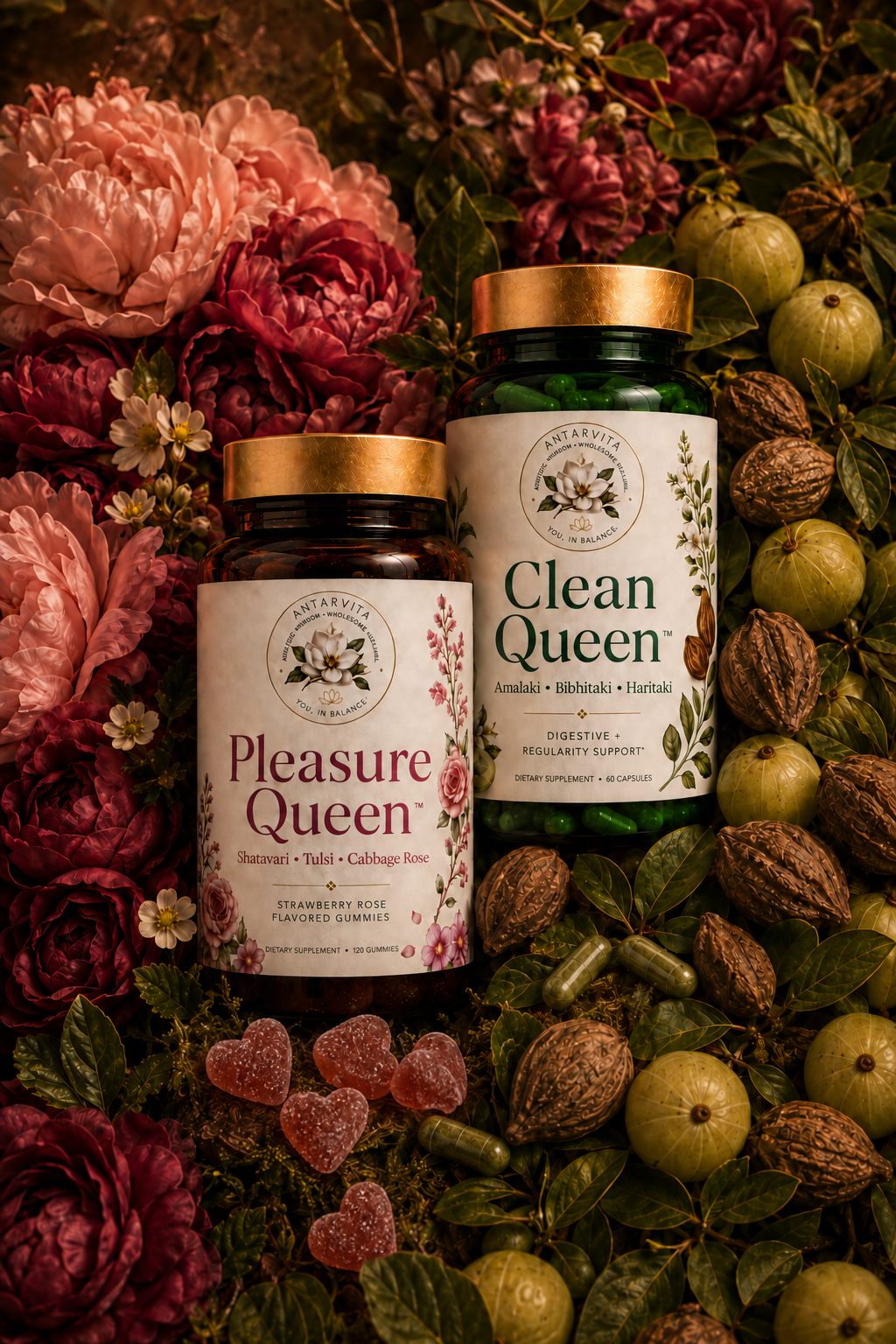
The herbs behind this article
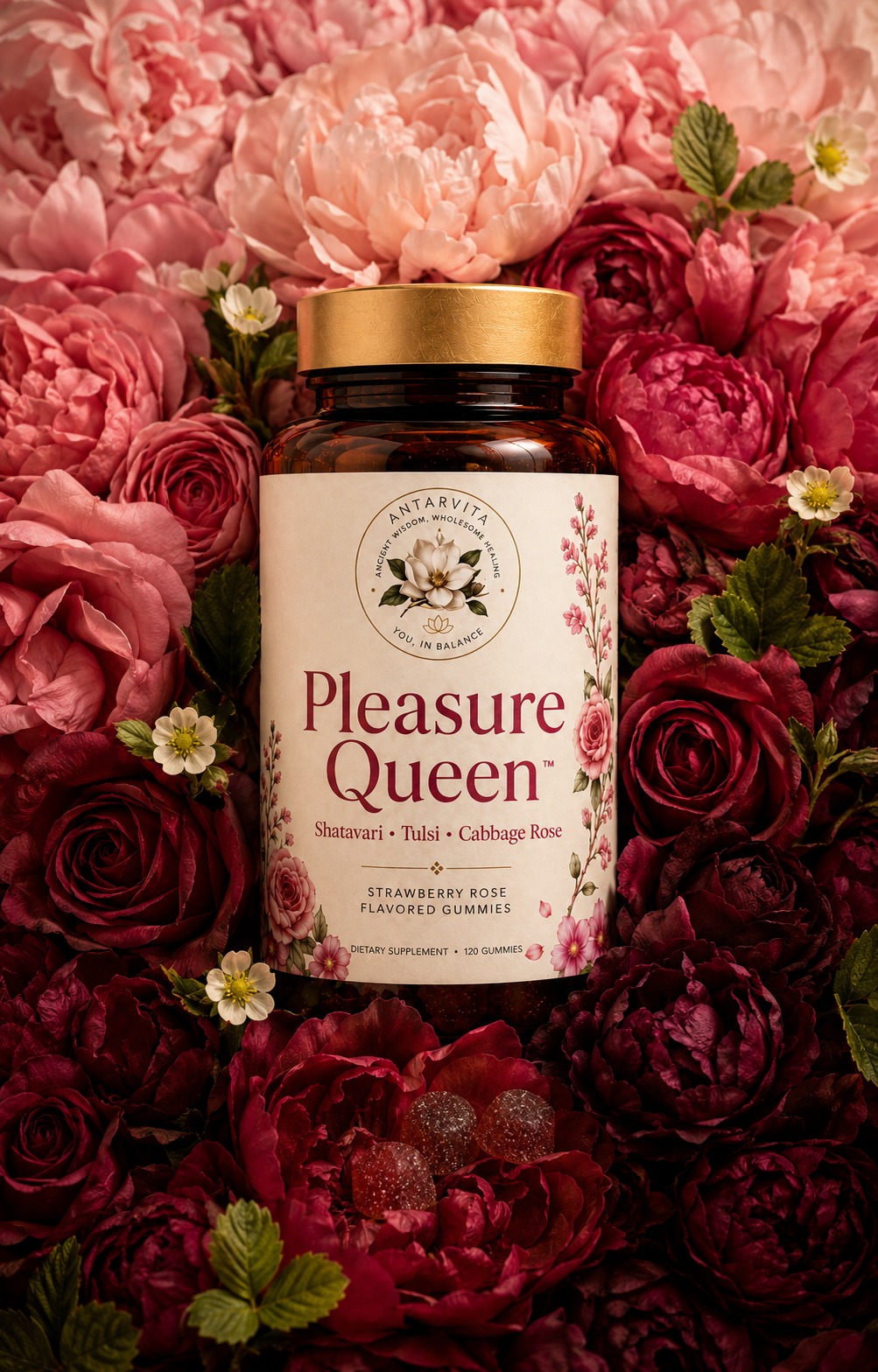
Begin to understand your body through an Ayurvedic lens
If you want to understand your body through a personalized Ayurvedic lens, begin with the Libido Body Type Quiz or explore a private Antarvita consultation.
References
- Porges, S. W. (2011). The Polyvagal Theory: Neurophysiological foundations of emotions, attachment, communication, and self-regulation. Norton. https://wwnorton.com/books/9780393707007
- Basisht, G. (2017). Understanding the concept of Vata and the nervous system in Ayurveda. Ayurvedic Perspectives on Neurology. https://pubmed.ncbi.nlm.nih.gov/28900323/
- Kumar, S., et al. (2020). The role of Abhyanga (Ayurvedic oil massage) in stress reduction and autonomic regulation. https://pubmed.ncbi.nlm.nih.gov/21568717/
- Lad, V. (2002). Textbook of Ayurveda, Volume One: Fundamental principles. The Ayurvedic Press. https://www.ayurveda.com/textbook-of-ayurveda-volume-one/
- Sharma, H., & Clark, C. (2011). Ayurvedic Healing: Contemporary Maharishi Ayurveda Medicine and Science. Singing Dragon. https://us.singingdragon.com/products/ayurvedic-healing