HRT and Ayurveda: Why Not Both?

Let me say this at the top, because I am tired of watching women get bullied into a corner by the internet: I am not anti-HRT. I am also not anti-herb. I am anti-being-told-there-is-only-one-right-answer when your body is a living, changing, gorgeously specific thing.
Hormone replacement therapy and Ayurveda are not competitors. They are not two versions of the same medicine. They do different jobs, on different tissue, on different timelines — and when we stop forcing them to fight, women get better outcomes than either can produce alone.
This is the version of the conversation I wish more of my clients had been offered before they were asked to pick a side.
Two different jobs, not two competing philosophies
HRT works on the endocrine system. It replaces the hormonal signal — estradiol, progesterone, sometimes testosterone — that the ovaries are no longer producing at the levels the body was built around. When that signal is restored, downstream tissues (bone, brain, vasculature, vaginal mucosa, skin) can respond the way they were designed to. This is why the 2022 North American Menopause Society position statement affirms that for symptomatic women under 60 or within 10 years of menopause, the benefit-risk profile of hormone therapy is favorable for hot flashes, genitourinary syndrome of menopause, and bone loss prevention (NAMS, 2022).
Ayurveda does not replace the signal. Ayurveda rebuilds the tissue the signal is landing on. In Sanskrit this work is called rasayana — literally, the path of essence. The classical texts describe rasayana herbs as ones that restore dhatu (tissue), ojas (vital reserve), and agni (digestive and metabolic fire). That is a completely different lever than a transdermal estradiol patch.
One nourishes the tissue. One restores the signal. If a woman is losing bone density, drying out, and waking up drenched at 3 a.m., she may need both — a hormonal signal her body can actually receive, and tissue that is well-fed enough to receive it.
Where HRT clearly wins
I want to be honest about this because too many wellness voices are not. There are symptoms and outcomes where hormone therapy is the more direct, more evidence-supported tool, and where relying only on herbs will leave a woman waiting for relief that isn't coming.
Genitourinary syndrome of menopause. Vaginal atrophy, urinary urgency, painful sex, recurrent UTIs. Local vaginal estrogen has one of the strongest, safest evidence bases in all of women's medicine (The NAMS 2020 GSM Position Statement). Sesame oil abhyanga is beautiful. It is not, on its own, going to rebuild estrogen-dependent vaginal tissue that has been thinning for five years.
Bone density. Estrogen is the most protective agent we have for postmenopausal bone loss (Cauley, 2015). Weight-bearing movement, mineral-rich foods, and Ayurvedic asthi-dhatu support matter — and they matter more when they are stacked with a hormonal signal the bone can actually respond to.
Severe vasomotor symptoms. Hot flashes that wake a woman ten times a night for three years are not a patience-and-tea situation. Systemic HRT reliably reduces vasomotor symptom frequency by ~75% (MacLennan et al., 2004, Cochrane Review). Herbs help. HRT works faster and harder on this specific symptom in most women.
Where Ayurveda does what HRT cannot
Hormone therapy does not, and was never designed to, cool an overheated liver, calm a wired nervous system, restore digestive fire, or rebuild the deep tissue reserve that Ayurveda calls ojas. This is the work I watch women skip — and then wonder why HRT alone didn't give them back the sense of being themselves.
Cooling the internal fire. Perimenopause is, almost universally, a Pitta-aggravated stage of life. Heat rises. Sleep gets thin. Skin gets reactive. Moods run hot. Ayurvedic cooling rituals — coconut oil scalp massage, room-temperature coriander-fennel-cumin water sipped through the day, moonlight walks, ghee at dinner, avoiding late-day caffeine and fermented heat — reduce the internal temperature that fuels hot flashes and hot moods (Sharma & Clark, 2011). These are not replacements for HRT. They lower the baseline that HRT is then dosed against.
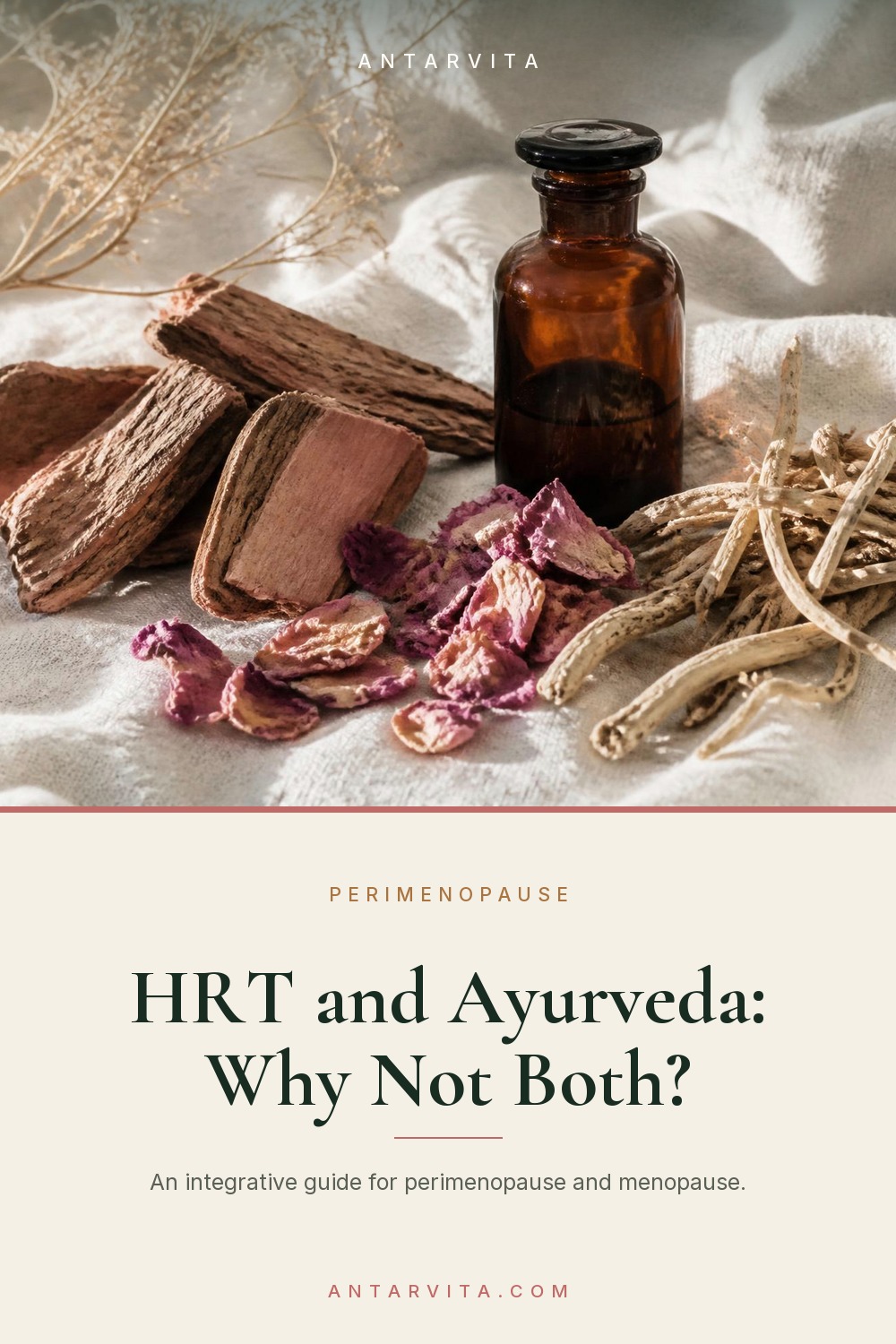
Herbs for hot moods and hot hearts. Arjuna ( Terminalia arjuna) is the Ayurvedic herb I reach for most often in perimenopause for palpitations, anxiety-flavored heat, and the "my chest is buzzing" feeling many women describe at 2 a.m. Arjuna has documented cardiotonic and cardioprotective effects in modern research (Dwivedi, 2007; Kapoor et al., 2014). It cools and steadies the heart in a way HRT does not target. Shatavari ( Asparagus racemosus) supports mucosal moisture and reproductive tissue and has shown promise for menopausal symptoms in preliminary trials (Pandey et al., 2018). Brahmi and jatamansi settle the overheated nervous system that HRT alone can leave humming.
A word on sourcing, because it matters. Ayurvedic herbs are only as clean as the soil they came from. Please buy certified organic, third-party tested (heavy metals, pesticides), and single-origin whenever possible. Cheap arjuna from a bulk supplier is not the same medicine as arjuna sustainably harvested and third-party assayed. The difference in a woman's body, over months, is real.
Digestion, sleep, and the deep reserve. HRT does not fix the 4 a.m. cortisol wake-up caused by ten years of skipped breakfasts and one-more-email nights. It does not rebuild agni or replenish ojas. Warm, oiled, cooked food; a real wind-down; abhyanga; a bedtime that is actually honored — these are the rasayana practices that determine whether a woman on HRT feels "better" or feels herself.
The integrative case — and what the research says
A growing body of integrative medicine literature supports using conventional hormone therapy alongside evidence-informed botanicals and lifestyle medicine, rather than treating them as mutually exclusive (Kligler et al., 2015; Johnson et al., 2019). The Academic Consortium for Integrative Medicine and Health defines integrative medicine explicitly as the coordinated use of conventional and complementary approaches, informed by evidence, in service of the whole person.
Translated: your endocrinologist and your Ayurvedic practitioner are not supposed to be at war. They are supposed to be looking at the same woman from two useful angles.
What I actually do with clients
If a woman comes to me already on HRT, we do not undo it. We build around it — cooling the Pitta the HRT is not addressing, feeding the tissue the hormones are trying to act on, steadying the nervous system so the sleep her estradiol should be helping with actually arrives.
If a woman comes to me not on HRT and wants to try herbs and lifestyle first, we do that — with a clear timeline, honest symptom tracking, and a standing agreement that if bone loss, severe GSM, or unmanageable vasomotor symptoms are on the table, we revisit HRT as a real, evidence-based option, not a moral failing.
The women who do best, in my clinical experience, are almost never the purists on either side. They are the ones who let their medicine be as layered as their bodies are.
Why not both?
HRT rebuilds the signal. Ayurveda rebuilds the tissue that receives it. Cooling rituals lower the fire the signal is trying to speak into. Arjuna quiets the heart. Shatavari feeds the mucosa. Sleep, food, oil, and breath restore the reserve none of it works without.
You do not have to pick a team. You get to build the version of this stage of life that actually feels like you, and use whatever tools — modern, ancient, pharmaceutical, botanical — are honest enough to earn a place in it.
That is the whole point of integrative care. That is the whole point of Antarvita.
Educational content only. This article is not medical advice, diagnosis, or treatment. Decisions about hormone replacement therapy and herbal medicine should be made in partnership with your qualified healthcare team, especially if you have a personal or family history of hormone-sensitive cancers, cardiovascular disease, or blood clotting disorders, or are taking prescription medication.
— Katy
Katy Kennedy, MS · Founder, Antarvita
Frequently asked questions
Can I take Ayurvedic herbs with HRT?
Many women do, but it must be a conversation with your prescribing physician. Disclose every herb, including shatavari and ashwagandha, before you begin.
Is Ayurveda an alternative to HRT?
No, and framing it that way does women a disservice. HRT addresses hormone levels. Ayurveda addresses rhythm, digestion, tissue quality and nervous-system load. Each does something the other cannot.
What does Ayurveda offer during perimenopause?
Structure for a Vata-rising transition: warmth, oleation, adequate fat, earlier sleep, and herbs like shatavari traditionally used for moisture and hormonal calm.
Will Ayurveda help hot flashes?
Cooling Pitta-calming practices — earlier dinners, less alcohol and coffee, coconut, cilantro, rose — are the traditional approach. Many women use them alongside HRT rather than instead of it.
The herbs behind this article
Begin to understand your body through an Ayurvedic lens
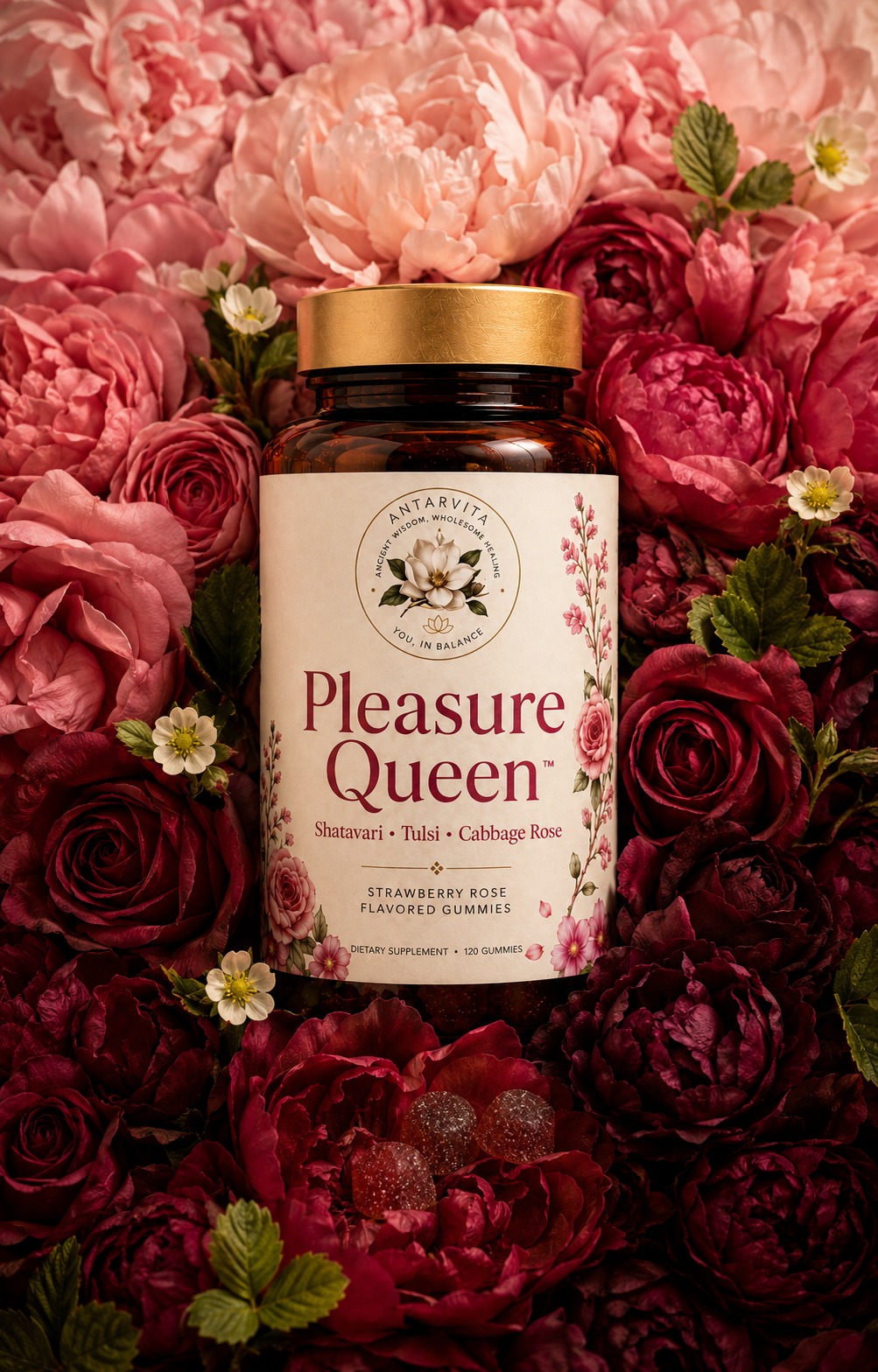
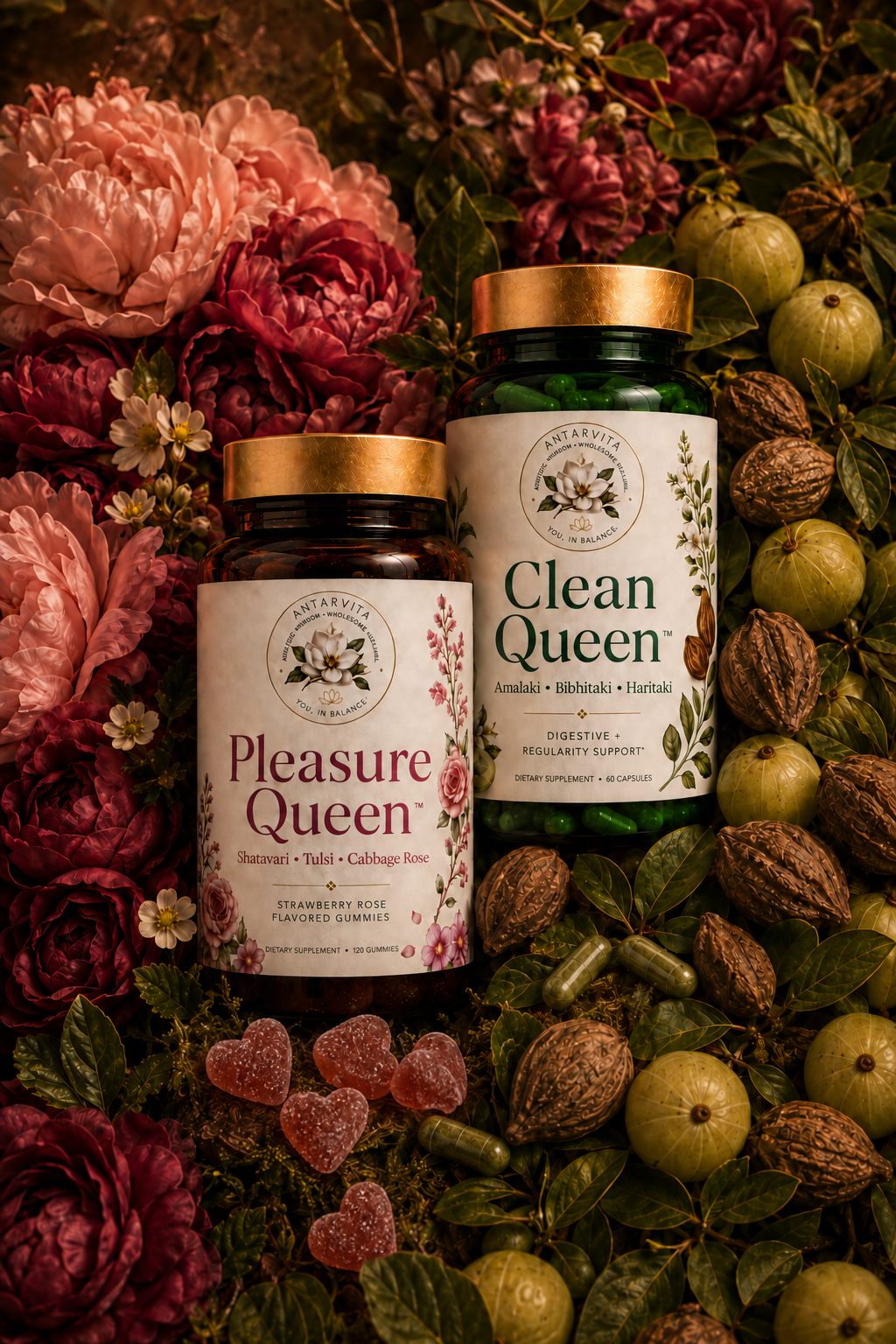
If you want to understand your body through a personalized Ayurvedic lens, begin with the Libido Body Type Quiz or explore a private Antarvita consultation.
References
- The 2022 Hormone Therapy Position Statement of The North American Menopause Society. (2022). Menopause, 29(7), 767–794. https://pubmed.ncbi.nlm.nih.gov/35797481/
- The 2020 Genitourinary Syndrome of Menopause Position Statement of The North American Menopause Society. (2020). Menopause, 27(9), 976–992. https://pubmed.ncbi.nlm.nih.gov/32852449/
- MacLennan, A. H., Broadbent, J. L., Lester, S., & Moore, V. (2004). Oral oestrogen and combined oestrogen/progestogen therapy versus placebo for hot flushes. Cochrane Database of Systematic Reviews, (4), CD002978. https://pubmed.ncbi.nlm.nih.gov/15495039/
- Cauley, J. A. (2015). Estrogen and bone health in men and women. Steroids, 99(Pt A), 11–15. https://pubmed.ncbi.nlm.nih.gov/25555470/
- Dwivedi, S. (2007). Terminalia arjuna Wight & Arn. — A useful drug for cardiovascular disorders. Journal of Ethnopharmacology, 114(2), 114–129. https://pubmed.ncbi.nlm.nih.gov/17875376/
- Kapoor, D., Vijayvergiya, R., & Dhawan, V. (2014). Terminalia arjuna in coronary artery disease: Ethnopharmacology, pre-clinical, clinical & safety evaluation. Journal of Ethnopharmacology, 155(2), 1029–1045. https://pubmed.ncbi.nlm.nih.gov/25046828/
- Pandey, A. K., Gupta, A., Tiwari, M., et al. (2018). Impact of stress on female reproductive health disorders: Possible beneficial effects of Shatavari (Asparagus racemosus). Biomedicine & Pharmacotherapy, 103, 46–49. https://pubmed.ncbi.nlm.nih.gov/29635127/
- Kligler, B., Brooks, A. J., Maizes, V., et al. (2015). Interprofessional competencies in integrative primary healthcare. Global Advances in Health and Medicine, 4(5), 33–39. https://pubmed.ncbi.nlm.nih.gov/26421231/
- Johnson, A., Roberts, L., & Elkins, G. (2019). Complementary and alternative medicine for menopause. Journal of Evidence-Based Integrative Medicine, 24, 2515690X19829380. https://pubmed.ncbi.nlm.nih.gov/30868921/
- Sharma, H., & Clark, C. (2011). Ayurvedic Healing: Contemporary Maharishi Ayurveda Medicine and Science. Singing Dragon. https://us.singingdragon.com/products/ayurvedic-healing