Pelvic Floor Release: The Ayurvedic Key to Desire You Haven't Tried Yet

You've taken the magnesium. You've cut the wine. You've read the article about ashwagandha for the third time, hoping this time it sticks the landing. And still — nothing. No spark, no craving, no want. Just a body that feels like it's politely declining an invitation it used to RSVP "yes" to instantly.
Here's what almost nobody tells you: desire isn't only a hormone problem or a mindset problem. Sometimes it's a holding problem. Specifically, a pelvic floor that has been clenched — quietly, unconsciously, for years — against stress, against deadlines, against the low hum of not feeling safe enough to fully exhale.
Ayurveda has understood this for a long time. Western pelvic health research is only now catching up.
→ New to Ayurveda? Start with your constitution, the beginner's entry point to Ayurveda, before you dive in — it'll make everything below click faster.
Strong isn't the same as open
Most of what we hear about pelvic floor health is about strengthening it — kegels, core work, "tightening things up." And there's a place for that. But an overly tight, chronically braced pelvic floor is not a strong one. It's a stuck one. Muscles held in a low-grade contraction for months or years lose blood flow, lose sensation, and lose their ability to fully relax into pleasure when the moment finally arrives.
This is the piece that gets missed: for many women, the reason arousal feels muted isn't a lack of desire in the mind. It's a body that has forgotten how to release.
Ayurveda would describe this as an imbalance of Vata, the dosha governing movement, the nervous system, and the flow of energy through the body. When Vata is aggravated by stress, overwork, or constant "on" mode, it shows up as tightness, dryness, restlessness, and a nervous system too activated to let go — even in bed, even with someone you trust.
What Ayurveda calls Shukra — and why it matters for desire
In Ayurvedic terms, sexual vitality and reproductive health live in what's called Shukra dhatu — the subtlest and most refined of the body's seven tissues, associated with reproductive fluid, hormonal balance, and life-force. Ayurveda understands Shukra as the tissue that's built last and depleted first, meaning chronic stress, poor digestion, and an exhausted nervous system will show up here before almost anywhere else.
This is why low libido rarely arrives alone. It tends to travel with fatigue, dry skin, disrupted sleep, and a digestive system (your Agni, or digestive fire) that's running low. If Agni is weak, the body can't properly build Ojas — the vital essence that gives you glow, resilience, and yes, a working sex drive. Everything in this system is connected. You cannot separate your gut health from your glow, and you cannot fully separate either one from your libido.
→ Curious where your body is out of balance? The 2-minute Libido Body Type Quiz gives you a real starting point.
The feminine energy piece no one talks about
There's a concept worth sitting with, regardless of your gender or relationship structure: feminine energy — the receptive, yin, magnetic quality in all of us — does not open on command. It opens when it feels safe, slowed down, and unrushed. This isn't about gender roles. It's about the nervous system. The masculine energy (also present in everyone) can initiate, pursue, and generate. But it cannot force the feminine to receive. Only safety can do that.
If your nervous system has been in low-grade fight-or-flight for the better part of a decade — hello, working women everywhere — your body may simply not believe it's safe enough to soften, open, and want. That's not a character flaw. That's biology doing exactly what it's designed to do: protect you first, please you second.
This is also, quietly, one of the most requested topics inside Antarvita consultations — women who are successful, healthy on paper, and still feel disconnected from their own desire. It is one of the most common imbalances we work with.
A practice to try tonight: pelvic floor breathing
You don't need a retreat or a weekend to start. Five minutes, lying down, is enough.
- Get horizontal. Lie on your back, knees bent, feet flat. Let your lower back soften into the floor or bed.
- Breathe into the base, not the chest. Inhale slowly through the nose and imagine the breath traveling all the way down into your pelvic floor, letting it widen and soften — like a flower opening, not closing. Most of us do the opposite by habit: we clench on the inhale. Reverse it.
- Exhale and release fully. As you breathe out, consciously let go of any gripping in your jaw, your glutes, your inner thighs, your low belly. These all quietly team up with the pelvic floor.
- Visualize warmth, not effort. On each inhale, picture a soft rose or pink light flowing into your hips and pelvis — warm, unhurried, without agenda. In Ayurveda, visualization paired with breath is a real tool for redirecting Prana (life force) toward a specific area of the body.
- Repeat for 5–10 rounds, ideally before bed or first thing in the morning, when your nervous system is naturally more receptive.
This is not a performance practice. There is no goal to hit. The goal is simply teaching your body, again, that it's allowed to open without being asked to perform.
Why your skin and your libido are more connected than you'd think
One more thread worth pulling: the same Shukra tissue that governs sexual vitality also governs the glow, moisture, and radiance of your skin. Ayurveda has always linked reproductive health and complexion — dry, dull, tired skin and a dry, dull, tired libido tend to arrive together, because they're drawing from the same well. If you've noticed both fading at once, that's not a coincidence. It's one root showing up in two places.
Herbs women reach for — and what they actually do
A quick, honest note: many women searching for libido support instinctively reach for herbs marketed toward men — horny goat weed, tribulus, yohimbe. These were largely studied and formulated for male sexual response and don't map cleanly onto how women's arousal actually works, which is far more tied to nervous system safety than to blood flow alone.
Traditionally, Ayurveda has instead looked toward herbs like Shatavari (traditionally used to support the female reproductive system and hormonal balance) and Ashwagandha (traditionally used to help the body adapt to stress and calm an overactive nervous system). Research on both is ongoing, but neither is a guaranteed fix, and neither replaces addressing the nervous system and pelvic tension directly. Herbs support the terrain. They don't override it.
This is exactly what an Ayurvedic consultation was built for
If any of this is landing — the tightness, the disconnection, the sense that your body used to want things and now mostly just wants to be left alone — you don't have to piece this together from blog posts (including this one). This is precisely the kind of full-picture imbalance an individualized Ayurvedic consultation is designed to unravel: your dosha, your Agni, your Shukra, your nervous system, all mapped together instead of guessed at separately.
→ Book a consultation to get a personalized picture of what's actually going on — and a real plan for coming back to yourself.
Sanskrit term index
- Vata — The dosha associated with movement, air, space, dryness, and nervous system activity. When aggravated, it can show up as tightness, restlessness, and difficulty relaxing.
- Shukra dhatu — The subtlest of the body's seven tissues, associated with reproductive fluid, hormonal balance, and sexual vitality. Often depleted first under chronic stress.
- Agni — Digestive fire; the body's ability to digest, transform, and assimilate food and experience.
- Ojas — The vital essence built from strong digestion, associated with resilience, glow, immunity, and vitality — including sexual vitality.
- Prana — Life-force energy, closely tied to the breath, that can be directed through the body via conscious breathing and visualization.
This article is for educational purposes only and is not medical advice. Herbs, supplements, foods, and wellness practices may not be appropriate for everyone. Please consult your healthcare practitioner before beginning any herbal, dietary, or wellness protocol, especially if you are pregnant, breastfeeding, taking medication, managing a medical condition, or experiencing persistent symptoms. By choosing to follow any suggestions shared here, you are responsible for checking with your healthcare practitioner and monitoring your own reactions, sensitivities, and side effects.
— Katy
Katy Kennedy, MS · Founder, Antarvita
Frequently asked questions
Can a tight pelvic floor cause low libido?
A chronically braced pelvic floor can reduce blood flow and sensation and make it harder for the body to relax into arousal. Strengthening is not the same as releasing — for many women the missing piece is learning to soften the pelvic floor rather than tighten it further.
How do I release my pelvic floor?
Lie on your back with knees bent, inhale slowly and let the breath widen and soften the pelvic floor rather than clenching it, then exhale and release the jaw, glutes, inner thighs and low belly. Repeat for five to ten rounds before bed. Consistency matters more than intensity.
What is Shukra dhatu in Ayurveda?
Shukra dhatu is the subtlest of the body's seven tissues in Ayurveda, associated with reproductive fluid, hormonal balance and sexual vitality. Because it is built last from digestion, it is typically the first tissue affected by chronic stress, poor sleep and weak digestive fire.
Why don't I feel anything during intimacy anymore?
Muted sensation often reflects a nervous system that has not felt safe enough to soften, combined with pelvic muscles held in low-grade contraction and depleted tissue from stress and poor digestion. It is a pattern, not a defect, and it responds to safety, release and nourishment. Persistent numbness or pain should be evaluated by a healthcare practitioner.
Are herbs marketed for male libido useful for women?
Herbs like horny goat weed, tribulus and yohimbe were largely studied for male sexual response and focus on blood flow. Women's arousal is more closely tied to nervous system safety, which is why Ayurveda traditionally favors Shatavari and Ashwagandha alongside nervous system and pelvic work.
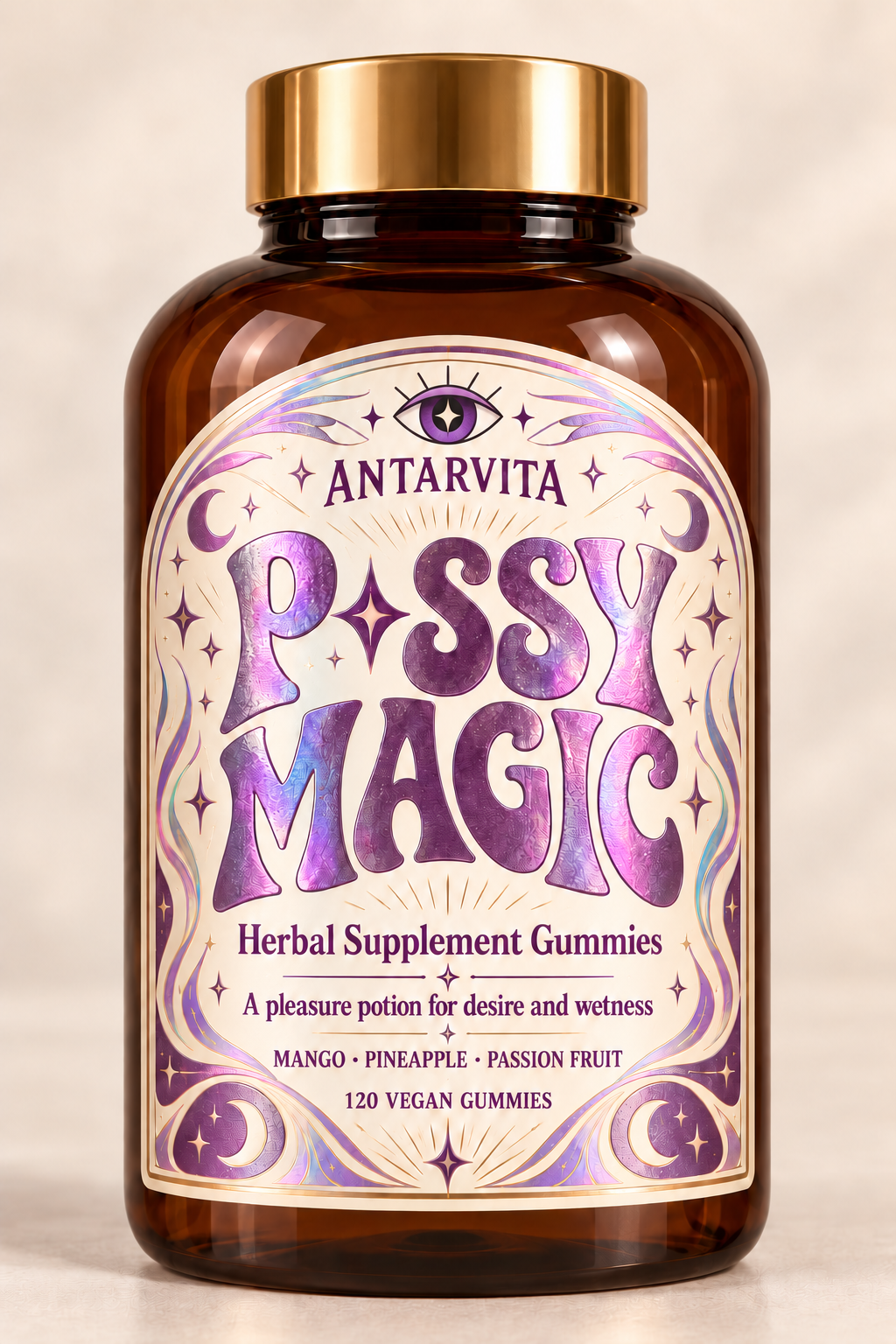
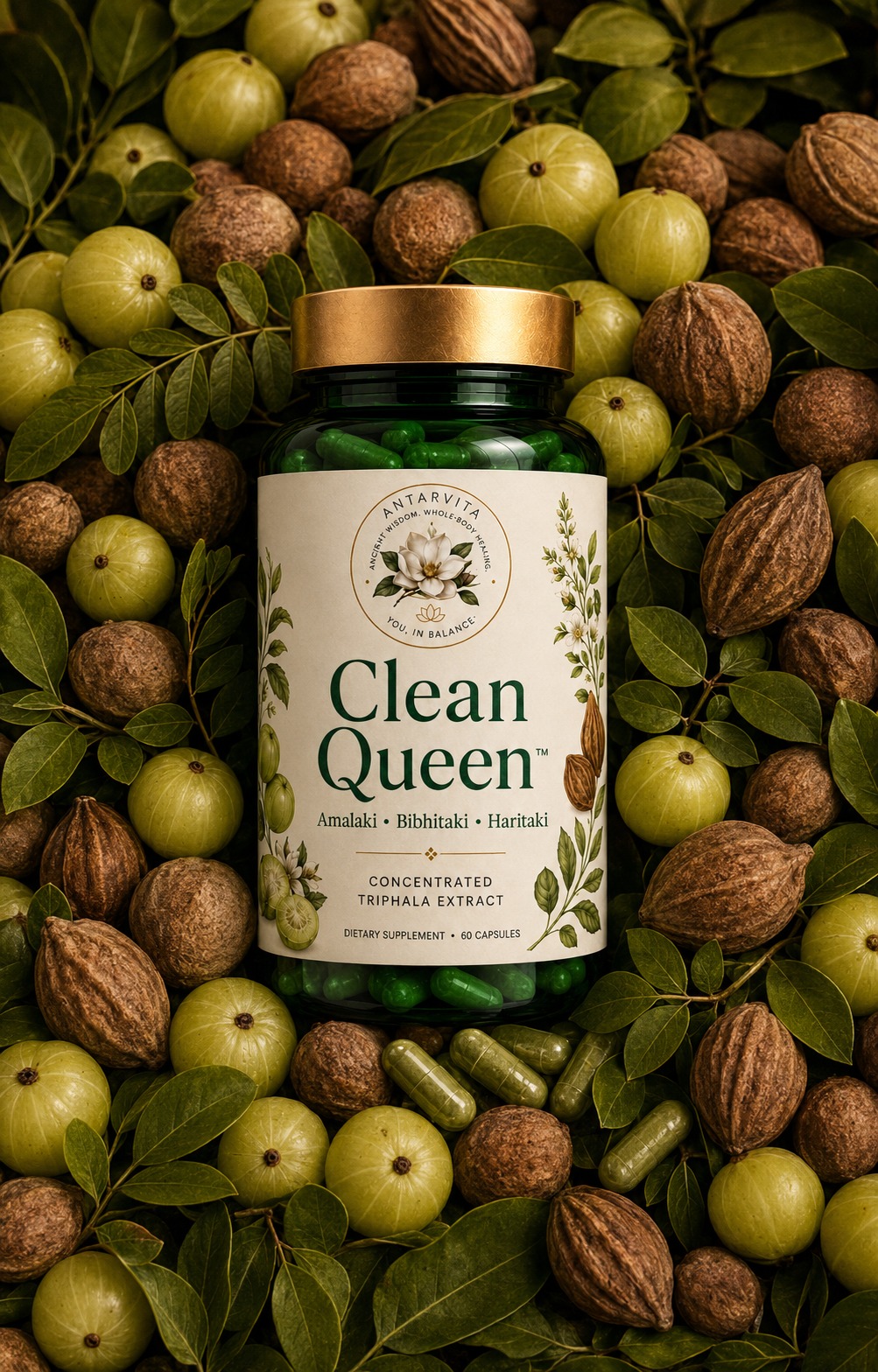
The herbs behind this article
Begin to understand your body through an Ayurvedic lens
If you want to understand your body through a personalized Ayurvedic lens, begin with the Libido Body Type Quiz or explore a private Antarvita consultation.
References
- Rosenbaum, T. Y. (2007). Pelvic floor involvement in male and female sexual dysfunction and the role of pelvic floor rehabilitation in treatment. Journal of Sexual Medicine, 4(1), 4–13. https://pubmed.ncbi.nlm.nih.gov/17233772/
- Padoa, A., McLean, L., Morin, M., & Vandyken, C. (2021). The overactive pelvic floor and sexual health. Sexual Medicine Reviews, 9(1), 76–92. https://pubmed.ncbi.nlm.nih.gov/32631813/
- Alok, S., et al. Plant profile, phytochemistry and pharmacology of Asparagus racemosus (Shatavari): A review. Asian Pacific Journal of Tropical Disease. https://pmc.ncbi.nlm.nih.gov/articles/PMC4027290/
- Salve, J., et al. (2019). Adaptogenic and anxiolytic effects of Ashwagandha root extract in healthy adults: A randomized, double-blind, placebo-controlled clinical study. Cureus, 11(12). https://pmc.ncbi.nlm.nih.gov/articles/PMC6979308/
- Basson, R. (2001). Human sex-response cycles. Journal of Sex & Marital Therapy, 27(1), 33–43. https://pubmed.ncbi.nlm.nih.gov/11224935/